FAC (Flow-Accelerated Corrosion) Inspection Handheld XRF Analyzers
3 products
Showing 1 - 3 of 3 products
Predict FAC risk fast, on-pipe, with handheld XRF
Flow-Accelerated Corrosion (FAC) programs often hinge on trace chromium content in carbon steel piping. Handheld XRF allows inspectors to verify Cr (as well as Cu and Mo) directly at the inspection point supporting inspection planning, outage prioritization, and reduced risk of unexpected failures.
Handheld XRF is widely used across fossil and nuclear power generation as a non-destructive screening tool to identify FAC-susceptible materials before advanced thickness measurements or replacements are scheduled.
Shop FAC-Ready XRF Analyzers (browse below)
Click here to talk to an Alloy Geek FAC Specialist
What is Flow-Accelerated Corrosion (FAC)?
Flow-Accelerated Corrosion is the progressive wall thinning of carbon and low-alloy steel piping caused by the removal of the normally protective oxide layer under flowing water or wet steam conditions.
FAC is most commonly observed at:
- Elbows, bends, and tees
- Reducers and fittings
- High-turbulence zones
- Feedwater and condensate systems
While FAC rate depends on multiple factors (flow velocity, temperature, water chemistry), material composition—particularly low chromium content—is a primary driver used in inspection planning and risk modeling.
Why Chromium Matters in FAC Programs
Small increases in chromium content significantly reduce FAC rate in carbon steels.
Materials with very low Cr content are generally more susceptible to accelerated thinning and require closer monitoring.
Handheld XRF enables:
- Rapid differentiation between low-Cr and higher-Cr carbon steels
- On-pipe verification without cutting samples
- Immediate screening decisions during walk-downs
This makes XRF a critical input for FAC inspection programs, inspection prioritization, and life-extension planning.
Typical FAC Measurement Workflow with Handheld XRF
-
Select inspection locations
Focus on known FAC-prone geometries such as elbows, tees, reducers, and areas of high turbulence. -
Prepare the surface
Remove oxidation, coatings, grease, and contamination. Proper surface prep is essential for accurate trace-level chromium measurements. -
Run screening tests
Short test times are often sufficient for identifying low-Cr materials. Longer tests may be used for borderline or critical decision points. -
Log and trend results
Record chemistry alongside line ID and location to support inspection planning and thickness measurement prioritization.
Elements Commonly Evaluated for FAC with Handheld XRF
For FAC susceptibility screening, handheld XRF is typically used to measure:
- Chromium (Cr) – primary indicator
- Copper (Cu) – secondary indicator
- Molybdenum (Mo) – secondary indicator
Chromium is the most critical element for FAC screening decisions.
Top 3, FAC-Ready Handheld XRF Analyzers In the Market
Thermo Scientific Niton XL5 Plus – Trace Chromium Performance
Best for FAC programs that require strong documentation, repeatability, and trace-element sensitivity. Why it works for FAC:
- Optimized for detecting trace Cr, Cu, and Mo in carbon steels
- Excellent repeatability for low-level chromium measurements
- Well-suited for structured FAC inspection workflows
Recommended for facilities that prioritize trace-element confidence and formal FAC inspection programs.
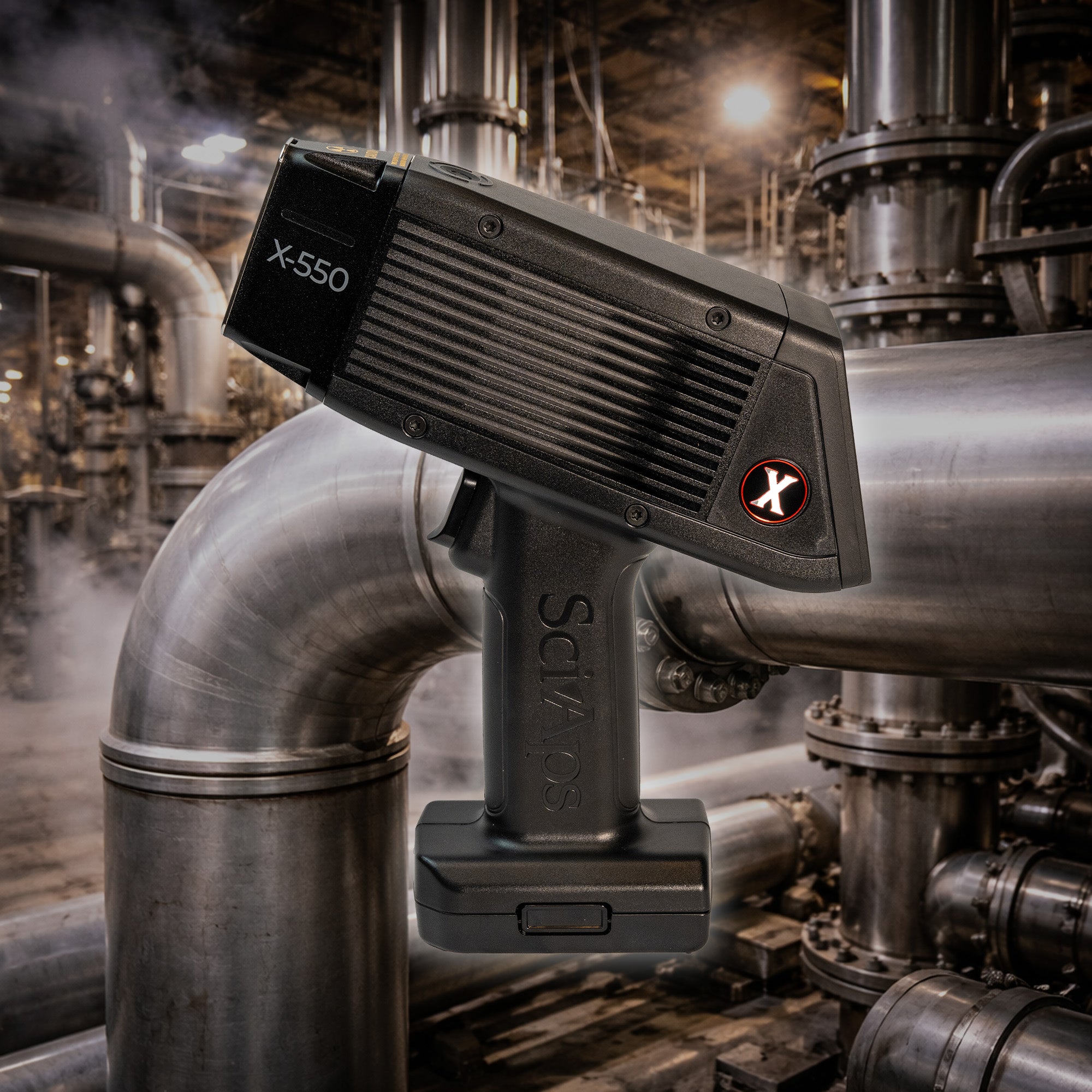
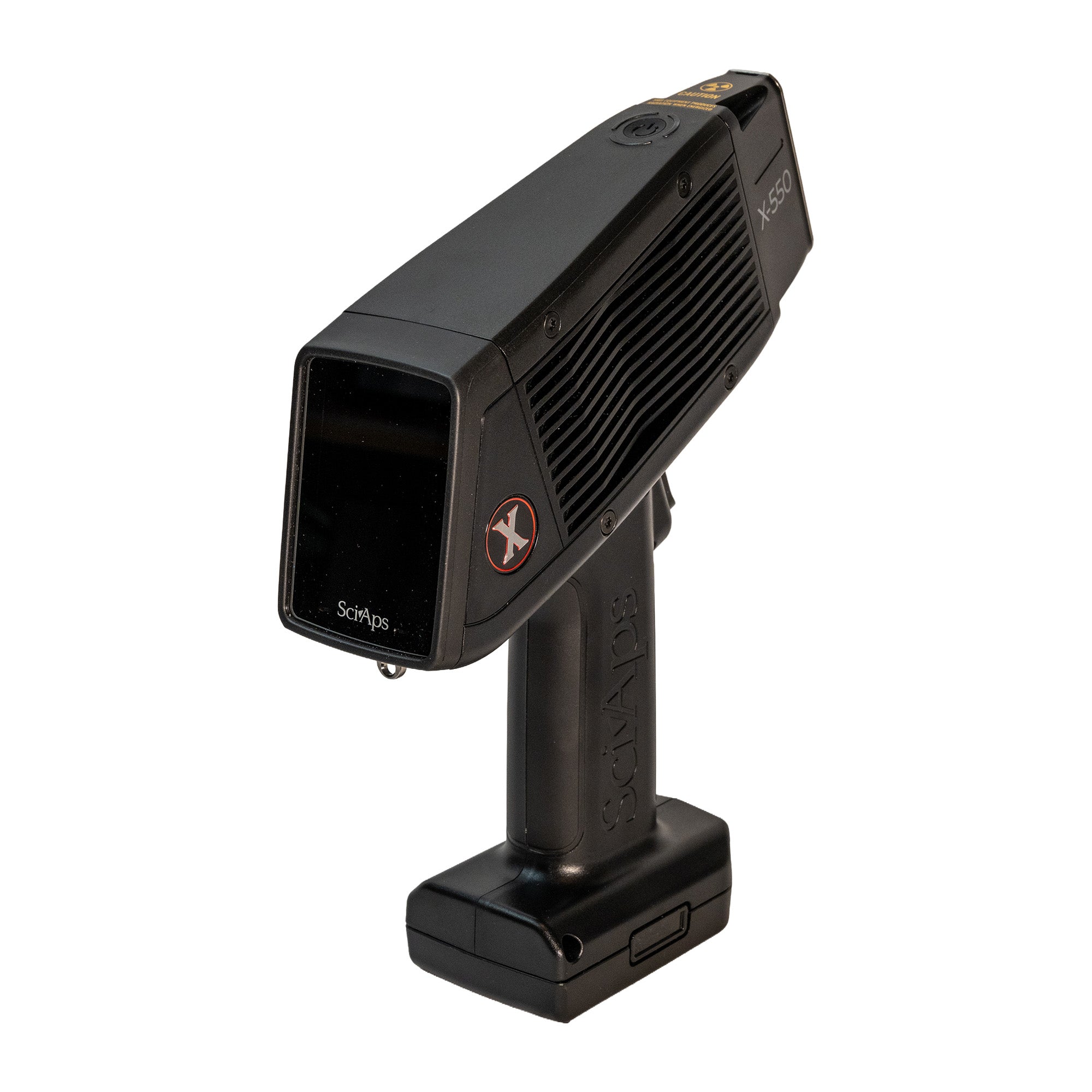
SciAps X-550 – FAC & PMI Inspection XRF
Best for fast FAC screening and PMI verification in power-generation environments where ergonomics, speed, and trace-level performance matter. Why it works for FAC:
- Designed for in-service piping inspection and tight access points
- Strong low-concentration chromium performance for FAC screening
- Modern user interface optimized for rapid field decisions
Recommended for utilities, inspection contractors, and maintenance teams performing routine FAC walk-downs and PMI verification.
Evident Vanta Core - Durable FAC Screening XRF
Best for simple, fast FAC screening and PMI verification in demanding industrial environments. Why it works for FAC:
- Rapid chromium measurement for quick susceptibility screening
- Rugged design for plant and field use
- Straightforward operation for maintenance and inspection teams
Recommended for plants looking for fast, reliable FAC screening without unnecessary complexity.
View Evident Vanta Core for FAC
Frequently Asked Questions
Can handheld XRF predict FAC by itself?
No. FAC rate depends on multiple variables. Handheld XRF is used to measure material chemistry, especially chromium, which is a critical input for FAC susceptibility assessment and inspection planning.
Is surface preparation required?
Yes. Oxide scale, paint, oil, and grease can significantly affect trace-level chromium measurements. Proper surface prep is essential for credible FAC screening results.
What element matters most for FAC screening?
Chromium (Cr) is the primary element used to assess FAC susceptibility. Copper and molybdenum are commonly evaluated as secondary indicators.
Build a Defensible FAC Screening Program
Tell us:
- Plant type (fossil or nuclear)
- Target chromium thresholds
- Typical surface condition
- Inspection throughput needs
We’ll help you select the right analyzer, test-time strategy, and accessories to support your FAC inspection program.
- Request a Quote Online
- Call us at 919-400-1216
- Email us at sales@alloygeek.com