Lead Paint Reference Materials for Handheld XRF Analyzers
1 product
Showing 1 - 1 of 1 product
Verify handheld XRF performance with lead paint reference materials designed for instrument validation, quality control, operator training, and routine analyzer checks.
This collection includes certified and application-specific reference materials for testing lead concentrations across a range of paint levels and substrate configurations. Products are available for HUD-approved lead paint analyzers, industrial XRF analyzers, environmental testing programs, rental fleets, training organizations, and laboratories that need a dependable method for confirming analyzer response.
Reference Materials for Lead Paint XRF Testing
Handheld XRF analyzers used for lead paint testing should be checked regularly using materials with known lead values. Reference materials help confirm that the analyzer is responding properly before field use and can also be used to evaluate repeatability, measurement stability, and operator technique.
Lead paint reference materials may be used for:
- Daily or periodic quality-control checks
- Analyzer verification before field inspections
- Rental equipment inspection and return testing
- Operator training and competency demonstrations
- Comparison of multiple handheld XRF analyzers
- Verification after service, repair, or calibration
- Industrial and environmental lead paint screening
- Development of internal XRF validation procedures
NIST Lead Paint Standard Reference Sheet
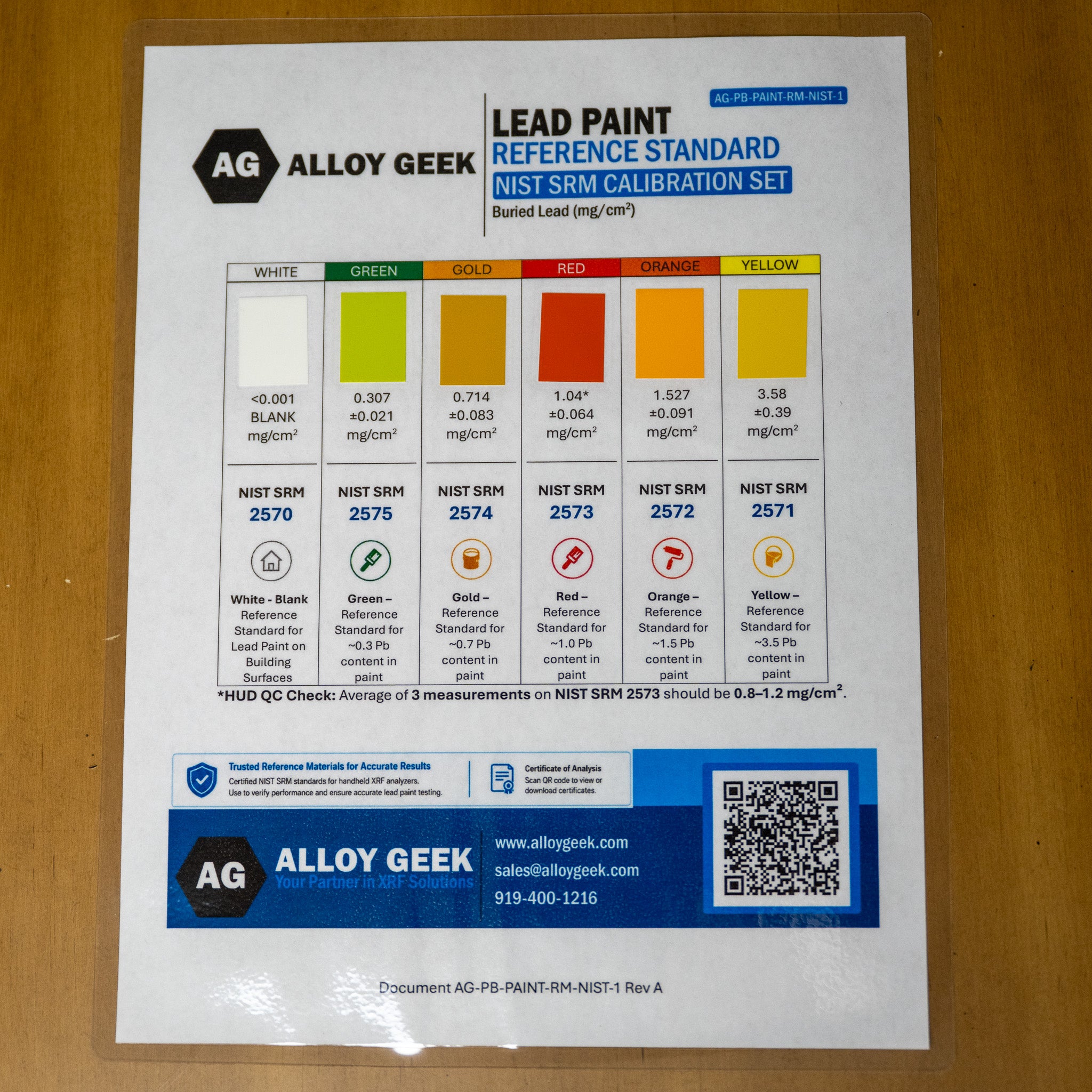
The Alloy Geek NIST Lead Paint Standard Reference Sheet combines multiple NIST Standard Reference Materials into one organized, durable validation tool for handheld XRF analyzers.
The reference sheet is designed to provide a practical range of known lead paint values in a format that is easy to identify, store, transport, and test. Each reference material is clearly labeled so users can quickly compare XRF results against the applicable certified or reference value.
This product is well suited for:
- HUD lead paint analyzer quality-control programs
- Environmental consultants and lead inspectors
- XRF rental and service companies
- Training providers
- Industrial hygiene programs
- Laboratories and equipment manufacturers
- Organizations managing multiple XRF analyzers
Lead Paint Test Blocks for HUD-Approved XRF Analyzers
This collection also includes analyzer-specific lead paint test blocks for use with HUD-approved handheld XRF analyzers, including:
Viken Pb200i Lead Paint Test Blocks
Reference and validation blocks designed for use with the Viken Detection Pb200i handheld XRF analyzer.
Viken Pb200e Lead Paint Test Blocks
Lead paint reference blocks intended for routine checks, operator verification, and performance testing of the Viken Detection Pb200e.
SciAps X-550 Pb Lead Paint Test Blocks
Application-specific test blocks for validating the response of the SciAps X-550 Pb handheld XRF analyzer used for lead paint inspection and screening.
Analyzer-specific test blocks provide a convenient method for checking instrument response using a consistent sample geometry and substrate. They may support internal quality-control procedures, training, rental fleet management, and pre-inspection analyzer checks.
Environmental and Industrial Lead Paint Standards
Not every lead paint application falls under residential HUD inspection requirements. This collection also includes reference materials for industrial, environmental, occupational, and general XRF validation applications.
Industrial lead paint testing may involve painted steel, coated components, machinery, structures, bridges, construction materials, or other substrates that differ from residential painted surfaces. Suitable reference materials allow users to evaluate analyzer response under conditions that more closely resemble the intended application.
These standards may be used for:
- Industrial coating analysis
- Lead screening on painted metal
- Environmental site investigations
- Construction and demolition screening
- Occupational exposure programs
- Manufacturing quality control
- Coating removal and remediation projects
- Research and method development
Why Use Lead Paint Reference Materials?
A handheld XRF analyzer can produce a numerical result even when the instrument, test setup, or sample geometry is not suitable for the intended application. Testing a known reference material helps identify potential issues before unknown samples are measured.
Reference materials can help detect:
- Analyzer drift
- Damaged or contaminated measurement windows
- Incorrect testing modes
- Poor sample positioning
- Insufficient measurement time
- Substrate or geometry effects
- Repeatability problems
- Differences between analyzers
A reference material check does not replace manufacturer calibration, formal service, or required regulatory procedures. It provides an independent and practical way to evaluate whether the analyzer is producing reasonable results on a material with a known lead value.
Choosing the Right Lead Paint Reference Material
Choose a reference material based on the analyzer, application, reporting units, lead concentration range, and substrate being tested.
For HUD lead paint inspection programs, select materials intended for use with the applicable HUD-approved analyzer and follow the manufacturer’s quality-control procedures and the applicable performance characteristic sheet.
For industrial or environmental testing, select reference materials that represent the expected concentration range and sample matrix as closely as practical. Painted wood, painted metal, polymer films, and other substrates can produce different XRF responses even when the lead concentration is similar.
For broader analyzer validation, use multiple reference materials spanning low, intermediate, and elevated lead levels rather than relying on a single check sample.
Important Use Information
Always follow the analyzer manufacturer’s operating instructions, applicable HUD procedures, regulatory requirements, radiation-safety program, and internal quality-control plan.
Unless specifically stated otherwise, Alloy Geek lead paint reference materials are intended for analyzer validation, quality control, training, comparison testing, and method development. They should not be interpreted as independently establishing that an analyzer is approved for a regulated application.
Frequently Asked Questions
What is a lead paint reference material?
A lead paint reference material is a sample with a known or characterized amount of lead that can be measured with an XRF analyzer. It provides a known target value for checking analyzer response.
Can these standards be used with any handheld XRF analyzer?
Some products are suitable for general handheld XRF validation, while others are designed around a particular analyzer, measurement mode, sample geometry, or regulatory application. Review the individual product description before use.
Do lead paint reference materials report results in ppm or mg/cm²?
The reporting units depend on the individual reference material and its intended use. Some standards are certified by lead mass fraction, commonly reported in mg/kg or ppm, while lead paint inspection analyzers may report lead loading in mg/cm².
Are these reference materials suitable for HUD quality-control checks?
Certain products in this collection are intended to support quality-control checks for HUD-approved lead paint analyzers. Users must follow the analyzer manufacturer’s procedures, the applicable HUD performance characteristic sheet, and all regulatory requirements.
Why should I test more than one lead level?
Testing several lead levels provides more information about analyzer performance than testing a single sample. A multi-level set can help evaluate response near an action threshold, repeatability across the measurement range, and differences between analyzers.
How often should a handheld XRF analyzer be checked?
The appropriate frequency depends on the application, manufacturer requirements, regulatory procedures, and the organization’s quality-control plan. Common checkpoints include before field use, after transportation, after service, after changing a measurement window, and whenever results appear unusual.