

Description
Certified reference material for CDA C98935 (Federalloy III-932), intended for XRF and spark OES calibration, verification, and quality control.
This C89835 (Federalloy III-932) Certified Reference Material (CRM) is designed for calibration verification, method validation, and quality control of XRF and Optical Emission Spectroscopy (OES) instruments analyzing lead-free bismuth bronze alloys.
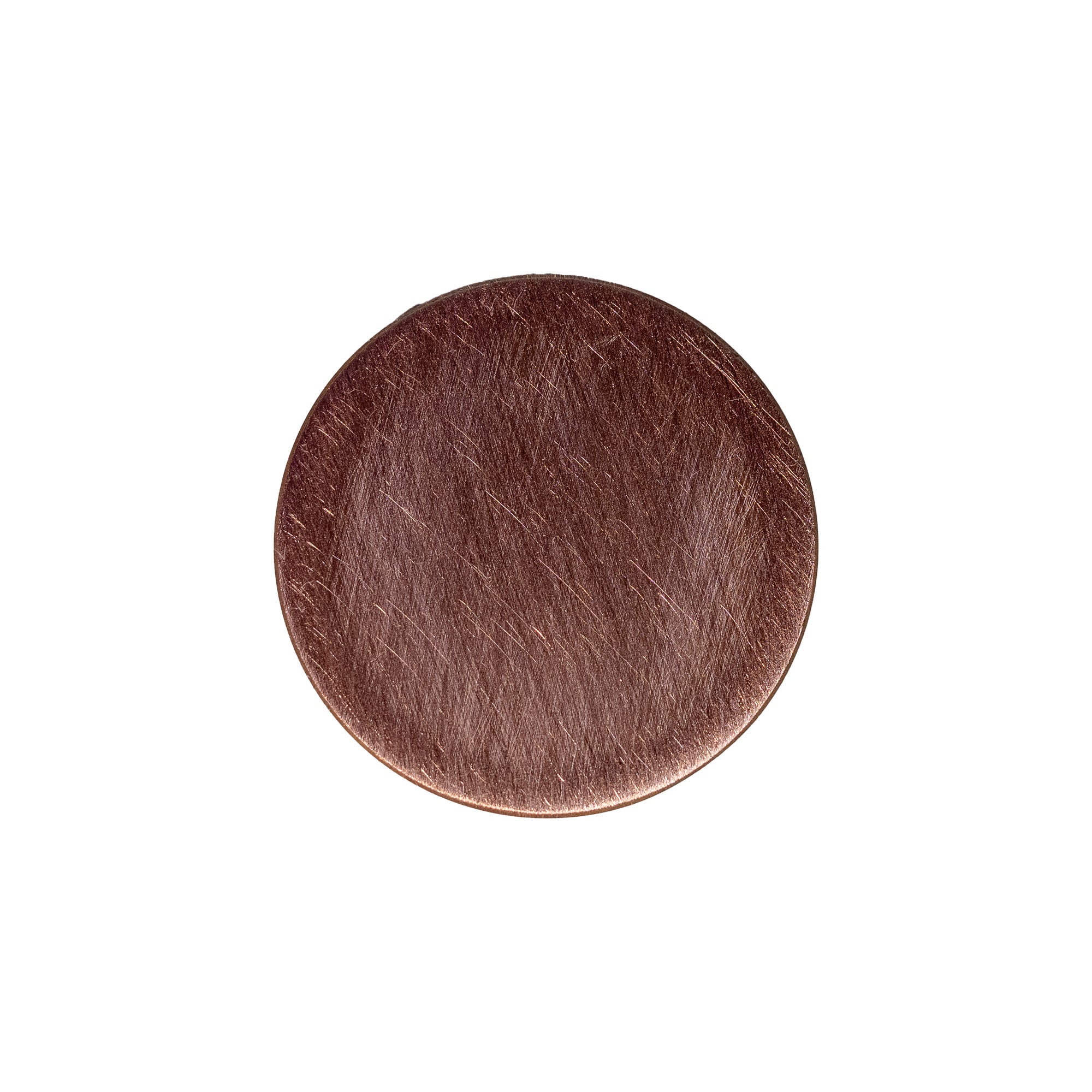
The CRM is supplied as a solid metallic disc, providing a stable and repeatable surface for XRF and OES analysis.
C89835 Certified Chemical Composition
| Element | Value |
|---|---|
| Al | 0.002 |
| Sb | 0.010 |
| As | 0.004 |
| Bi | 2.37 |
| C | 0.002 |
| Cr | (0.002) |
| Co | (0.001) |
| Cu | (87) |
| Fe | 0.035 |
| Pb | 0.010 |
| Mn | 0.002 |
| Ni | 0.46 |
| P | 0.032 |
| Se | 0.001 |
| Ag | 0.001 |
| Sn | 6.9 |
| Zn | 3.48 |
Intended Use (XRF & OES Only)
- Handheld and benchtop XRF analyzer verification
- Spark OES calibration and performance checks
- Confirmation of C89835 bismuth-bronze chemistry
- Routine quality control and method validation
Material Information
- UNS: C89835
- Common designation: Federalloy III-932
- Material class: Lead-free / low-lead bismuth bronze
- Primary alloy system: Cu–Sn–Zn–Bi
- Typical applications: Plumbing components, valves, fittings, cast bronze parts
XRF & OES Notes
- Major alloying elements: Bismuth (Bi), Tin (Sn), and Zinc (Zn) define the primary C89835 bismuth bronze chemistry.
- Lead-free verification: XRF can be used to verify lead-free compliance based on the alloy’s very low Pb content.
- XRF limitations: Light elements such as Carbon (C), Phosphorus (P), and Sulfur (S) are not typically measurable by handheld XRF.
- OES advantage: Optical Emission Spectroscopy (OES) can directly measure light elements and should be used where full elemental confirmation is required.
What’s Included
- C89835 Bronze Certified Reference Material
-
Certificate of Analysis with certified values and uncertainty
Frequently Asked Questions
What is this Certified Reference Material used for?
This CRM is used for calibration verification, method validation, and quality control of XRF and Optical Emission Spectroscopy (OES) instruments analyzing C89835 bismuth bronze alloys.
Which analytical methods is this CRM suitable for?
This material is suitable for use with handheld and benchtop XRF analyzers as well as Optical Emission Spectroscopy (OES) systems.
Can this CRM be used to verify lead-free compliance?
Yes. XRF can be used to confirm lead-free status based on the alloy’s very low lead (Pb) content, making it appropriate for regulatory screening and compliance verification.
Why are some elements shown as reference values only?
Reference values are provided for elements that were evaluated but did not meet the criteria for certification. These values are included for informational purposes and are marked accordingly.
Why are light elements not listed or not measurable by XRF?
Light elements such as Carbon (C), Phosphorus (P), Sulfur (S), and Aluminum (Al) are not measurable by handheld XRF or are available in too low concentration. These elements can be better measured using OES, which is recommended when light-element confirmation is required.
Is this material suitable for handheld XRF analyzers with PIN or SDD detectors?
Yes. This CRM is suitable for both PIN-diode and SDD-based handheld XRF analyzers for verification of major and secondary alloying elements.
Does this CRM include documentation?
Yes. Each unit is supplied with a Certificate of Analysis detailing certified and reference elemental values.
Is this CRM intended for manufacturing or alloy production?
No. This material is intended solely for analytical calibration, verification, training, and quality control and is not intended for manufacturing or end-use production.