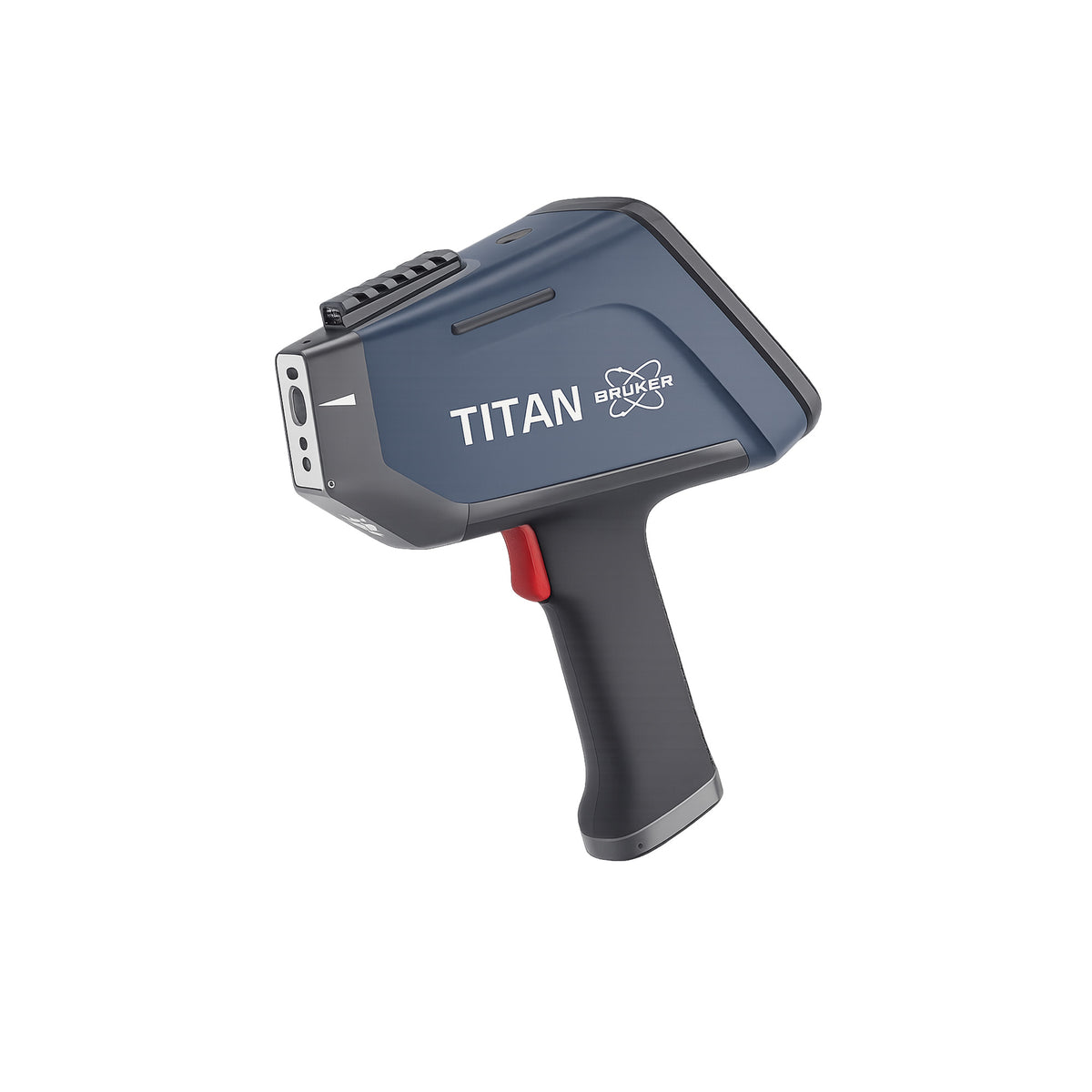
Bruker TITAN 380 Handheld XRF Analyzer
3 products
Showing 1 - 3 of 3 products
The Ultimate Bruker TITAN for Advanced Handheld XRF Analysis
The Bruker TITAN 380 Handheld XRF Analyzer is the most versatile configuration in the TITAN family, designed for customers who need advanced elemental analysis across a wide range of materials and applications.
From alloy identification and scrap metal sorting to mining, geochemistry, precious metals, environmental screening, consumer products, catalytic converters, coatings, oils, agriculture, and research, the TITAN 380 provides a flexible handheld XRF platform for demanding analytical work.
With broad elemental coverage, light-element capability, adjustable X-ray excitation, multiple beam filters, and selectable measurement spot sizes, the TITAN 380 is designed to go beyond single-purpose handheld XRF applications.
Whether you're identifying an unknown alloy, analyzing drill core, screening soil for heavy metals, measuring precious metals, testing a catalytic converter, or investigating an unfamiliar material, the TITAN 380 brings advanced elemental analysis directly to the sample.
One Handheld XRF. A Wide Range of Applications.
The TITAN 380 can be configured for an exceptionally broad range of XRF applications, including:
- Alloy identification & Positive Material Identification (PMI)
- Scrap metal sorting & recycling
- Aluminum & magnesium alloy sorting
- Precious metals & jewelry analysis
- Mining & mineral exploration
- Geochemistry
- Drill core & drill chip analysis
- Ore analysis & grade control
- Soil & sediment analysis
- Environmental contamination screening
- Catalytic converter analysis
- Consumer product & restricted-material screening
- RoHS and regulatory screening
- Coating analysis & coating thickness applications
- Wear metals and oil analysis
- Agriculture, soils & plant analysis
- Food and consumer safety applications
- Archaeology & cultural heritage
- Research & general elemental analysis
- Incoming material inspection & quality control
The appropriate calibration, accessories, sample preparation, and measurement method depend on the application. Contact Alloy Geek to configure the TITAN 380 for your analytical requirements.
Alloy Identification & PMI
For metals applications, the TITAN 380 provides advanced elemental analysis for both ferrous and nonferrous alloys.
Applications include stainless steels, low-alloy steels, tool steels, nickel alloys, cobalt alloys, copper alloys, aluminum alloys, magnesium alloys, titanium alloys, and other engineering materials.
Its light-element capability is particularly valuable for advanced alloy identification where elements such as Al, Mg, Si, P, and S are important to differentiating grades.
The TITAN 380 can be used for: Scrap Sorting, Positive Material Identification (PMI), Incoming Inspection, Material Verification, Quality Control, Metal Purchasing, Manufacturing, Fabrication, and more!
Scrap Metal & Recycling
Handheld XRF allows recyclers to rapidly identify unknown metals while the material is still in the yard.
The TITAN 380 can be used to sort both ferrous and nonferrous materials, including valuable nickel and cobalt alloys, stainless steels, copper alloys, aluminum alloys, magnesium alloys, titanium alloys, and other specialty metals.
For recycling operations handling a particularly diverse material stream, the TITAN 380 provides the flexibility to move beyond basic grade identification into more advanced elemental analysis.
Precious Metals & Jewelry
The TITAN platform can be configured for nondestructive analysis of gold, silver, platinum, palladium, and common jewelry alloys.
Handheld XRF provides elemental chemistry directly at the point of purchase, recycling, appraisal, or inspection without requiring the valuable item to be destroyed.
Applications include: Gold Buying, Jewelry Analysis, Precious Metals Recycling, Refinery Intake, Pawn & Estate Jewelry, Manufacturing & Quality Control
Mining, Mineral Exploration & Geochemistry
The TITAN 380 is also a powerful field instrument for geological analysis.
Portable XRF allows geologists to analyze rocks, soils, sediments, drill core, drill chips, pulps, mineralized samples, and ores directly in the field.
Applications include:
- Mineral exploration
- Geochemical mapping
- Lithological characterization
- Drill-core analysis
- Drill-chip analysis
- Alteration studies
- Ore characterization
- Grade control
- Mine-site screening
- Process and stockpile applications
Rapid field data can help exploration and mining teams make decisions while the samples and geological context are still immediately available.
Soil & Environmental Analysis
The TITAN 380 can be configured for rapid elemental screening of soils, sediments, contaminated materials, and environmental samples.
Potential applications include: Heavy Metals Screening, Contaminated Site Investigation, Soil Characterization, Remediation Projects, Mine-Site Monitoring, Environmental Field Screening, etc.
Handheld XRF can be particularly valuable for rapidly screening a large number of locations and identifying areas that warrant additional sampling or confirmatory laboratory analysis.
Catalytic Converter Analysis
The TITAN platform can also be configured for automotive catalytic converter analysis.
XRF can measure valuable platinum-group metals including platinum (Pt), palladium (Pd), and rhodium (Rh) in catalytic converter materials.
For recycling and precious-metal recovery operations, properly prepared and representative samples can be analyzed to provide rapid elemental information used in material evaluation and processing decisions.
Consumer Products & Regulatory Screening
Portable XRF provides a rapid way to screen products and materials for regulated or restricted elements.
Applications can include:
- Consumer product screening
- Electronics and components
- Jewelry and accessories
- Plastics
- Furniture and manufactured products
- Restricted-material screening
- RoHS-related applications
- Incoming material inspection
Because XRF can analyze many materials directly and nondestructively, large or difficult-to-transport products can often be screened where they are located.
Coatings & Surface Analysis
The TITAN platform can also be used for specialized coating and surface-analysis applications.
Depending on the material, calibration, substrate, and coating system, handheld XRF can provide information about elemental composition and coating thickness.
Potential applications include industrial coatings, metallic coatings, plated components, manufacturing quality control, and material verification.
Oil, Wear Metals & Industrial Fluids
XRF can also be applied to certain oil and industrial-fluid applications.
Bruker has developed portable XRF methods for applications including wear metals in oil and sulfur screening in fuel oils.
These applications demonstrate the versatility of handheld XRF beyond traditional solid-metal and geological measurements.
Agriculture, Soil & Plant Analysis
Portable XRF can provide rapid elemental information for agricultural and research applications involving soils, crops, and plant materials.
Applications can include soil characterization, nutrient-related research, elemental screening of plant materials, and field studies where rapid analytical feedback is valuable.
Sample preparation and measurement methodology can be particularly important when analyzing heterogeneous biological and agricultural materials.
Archaeology, Cultural Heritage & Research
Nondestructive elemental analysis also makes handheld XRF valuable for research applications where preservation of the sample is important.
Portable XRF has been applied to archaeological materials, ceramics, artifacts, metals, pigments, and cultural heritage objects.
Researchers can collect elemental information directly from objects that may be too valuable, fragile, or impractical to sample destructively.
Advanced Light-Element Analysis
The TITAN 380 provides light-element capability for important elements including: Aluminum (Al), Magnesium (Mg), Silicon (Si), Phosphorous (P), Sulfur (S), and Calcium (Ca) in some applications.
These elements are important across applications ranging from aluminum alloy sorting and steel analysis to geological, mineral, environmental, and industrial materials.
Combined with its broader elemental range, the TITAN 380 provides a powerful analytical platform for customers who encounter diverse materials rather than a single predictable sample type.
Flexible Excitation for Different Applications
Different elements and materials benefit from different X-ray excitation conditions.
The TITAN 380's advanced excitation system allows measurement conditions to be optimized for different portions of the elemental spectrum and different sample matrices.
This flexibility is particularly important when moving between dramatically different applications—for example, from alloy analysis to geological samples, soils, precious metals, or other complex materials.
Selectable Measurement Spot
Not every XRF sample is large and uniform.
Selectable measurement spot sizes allow the TITAN 380 to perform more targeted analysis when working with small samples, mineralized veins, welds, geological features, jewelry, components, and heterogeneous materials.
A larger measurement area can be used when a broader, more representative analysis of the sample is desired.
Portable & Desktop Testing Options
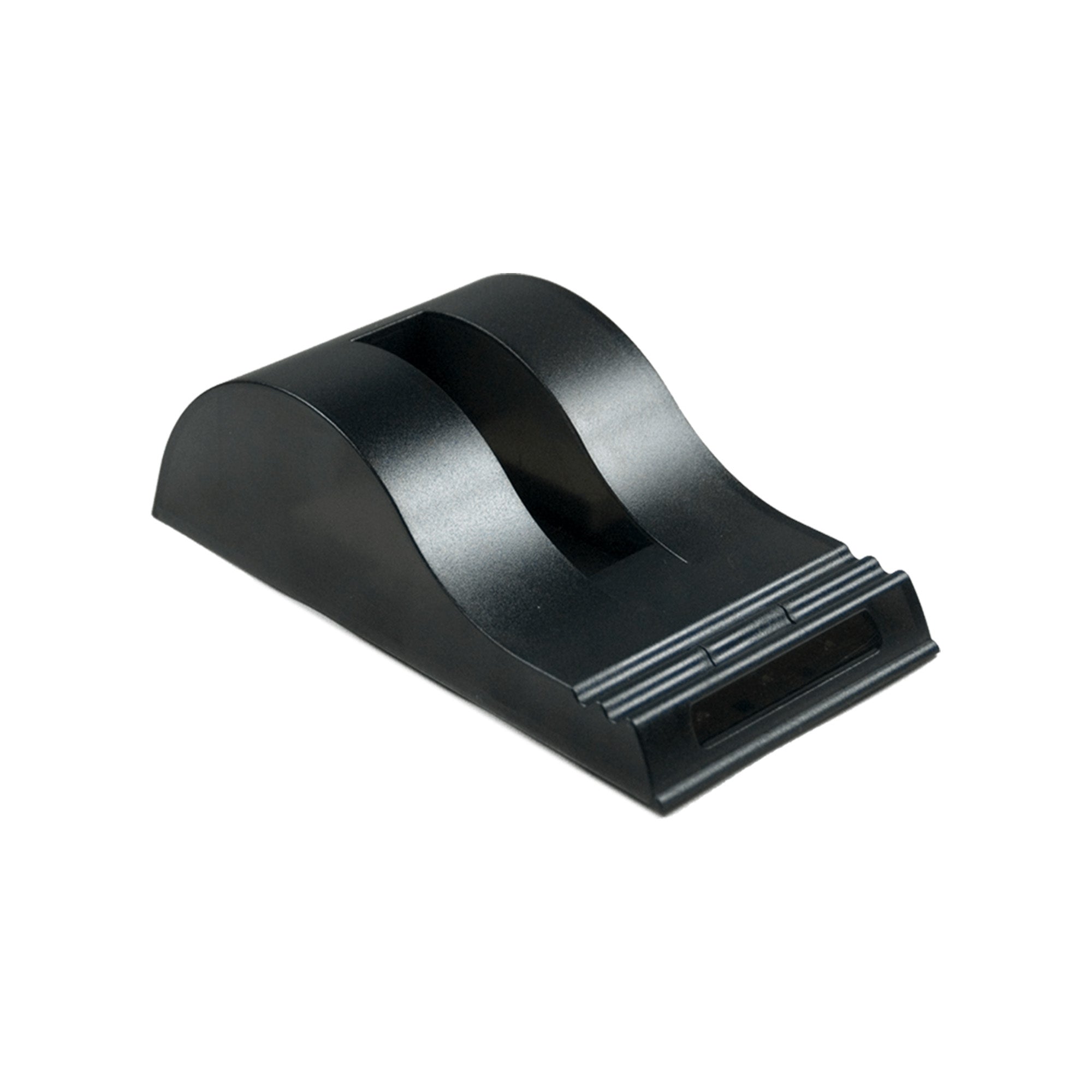
The TITAN 380 can be paired with optional test stands for closed-beam XRF operation.
A portable test stand provides a convenient configuration for smaller samples, prepared materials, powders, reference materials, jewelry, catalytic converter samples, and applications where longer measurement times are desired.
For customers performing frequent benchtop measurements, Alloy Geek will also offer a larger desktop test stand for routine closed-beam XRF analysis.
Contact Alloy Geek for TITAN test stand options and availability.
TITAN 350 vs. TITAN 360 vs. TITAN 380
The right TITAN depends on how broadly you intend to use your handheld XRF.
The TITAN 350 provides an economical solution for applications primarily requiring heavier-element analysis and conventional alloy identification.
The TITAN 360 adds light-element measurement, including Al, Mg, Si, P, and S, making it substantially more capable for advanced alloy identification and light-alloy sorting.
The TITAN 380 is the most versatile TITAN configuration, designed for customers who want the broadest application capability. Its advanced excitation and measurement flexibility make it appropriate for applications extending well beyond alloy identification into mining, geochemistry, environmental analysis, precious metals, catalytic converters, consumer products, coatings, oils, agriculture, research, and other specialized XRF applications.
Need straightforward alloy identification?
Explore the Bruker TITAN 350.
Need advanced alloy sorting with light-element analysis?
Explore the Bruker TITAN 360.
Want the most versatile TITAN for advanced multi-application XRF analysis?
Explore the Bruker TITAN 380.
Configure the TITAN 380 for Your Application
The versatility of the TITAN 380 also means that configuration matters.
Different applications may require different calibrations, measurement methods, accessories, reference materials, sample preparation, and quality-control procedures.
Tell Alloy Geek what you need to analyze and what decisions you need to make from the results. We can help determine the appropriate TITAN 380 configuration for your application.
Buy the Bruker TITAN 380 from Alloy Geek
Alloy Geek specializes in handheld XRF analyzers, certified reference materials, operator training, accessories, replacement parts, and XRF application support.
Whether you're sorting alloys, analyzing drill core, testing precious metals, screening soils, evaluating catalytic converters, or developing a specialized XRF application, we'll help you determine whether the Bruker TITAN 380 is the right configuration for your work.
Contact Alloy Geek to discuss your application or request a quote for the Bruker TITAN 380.