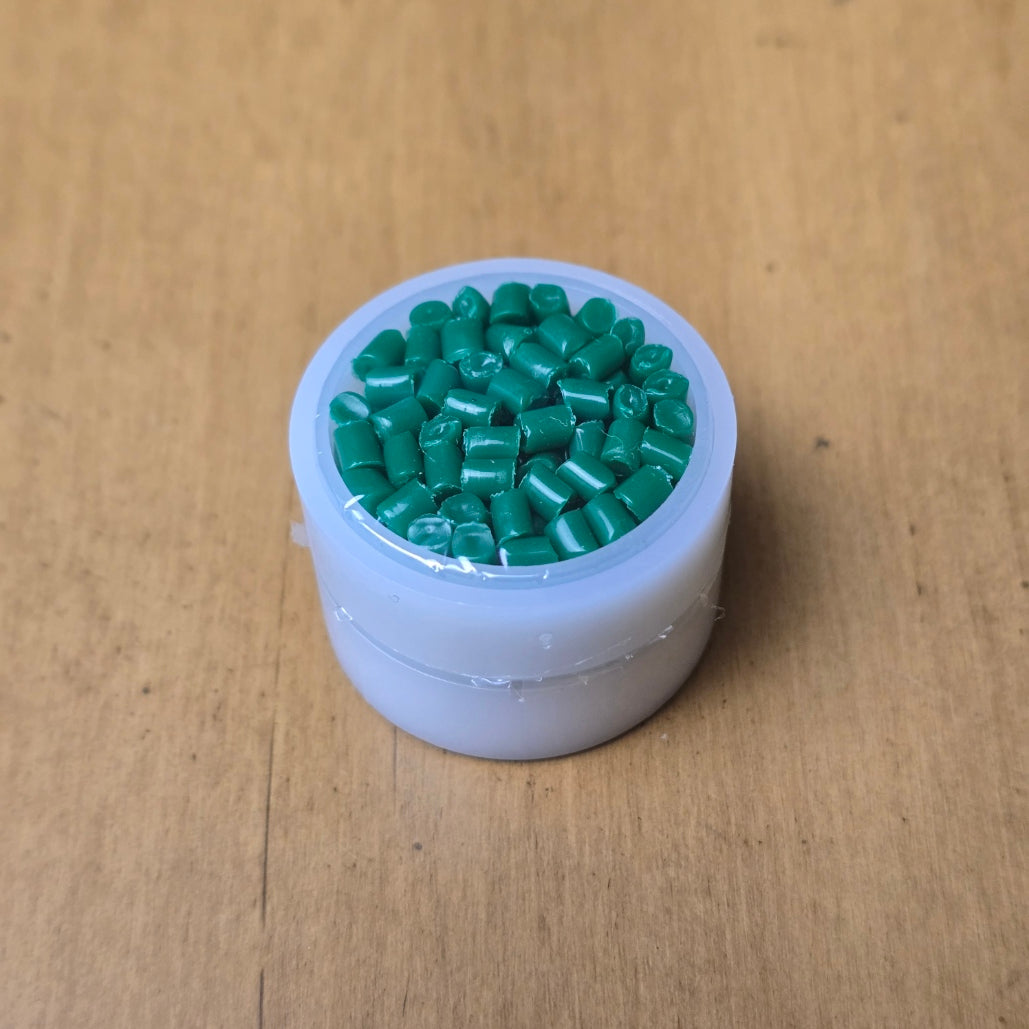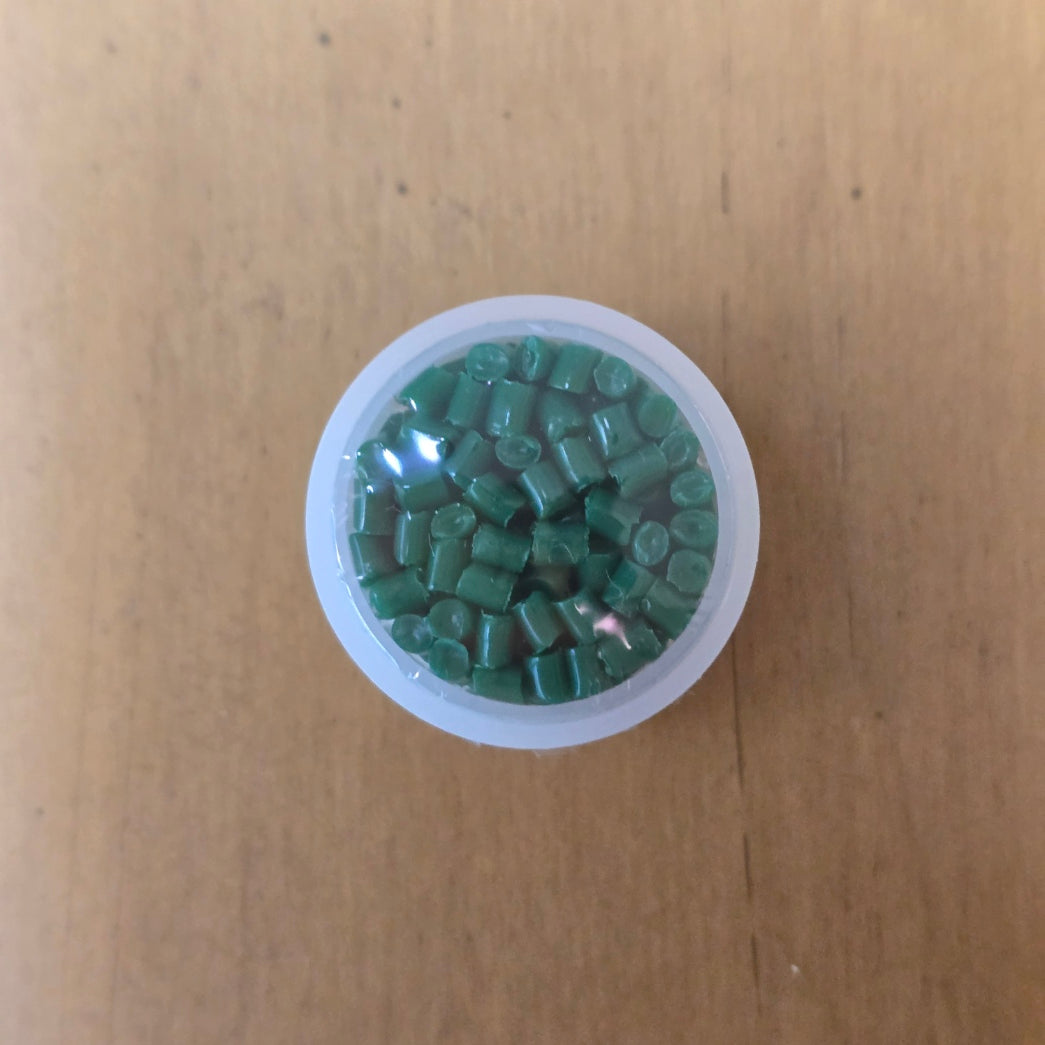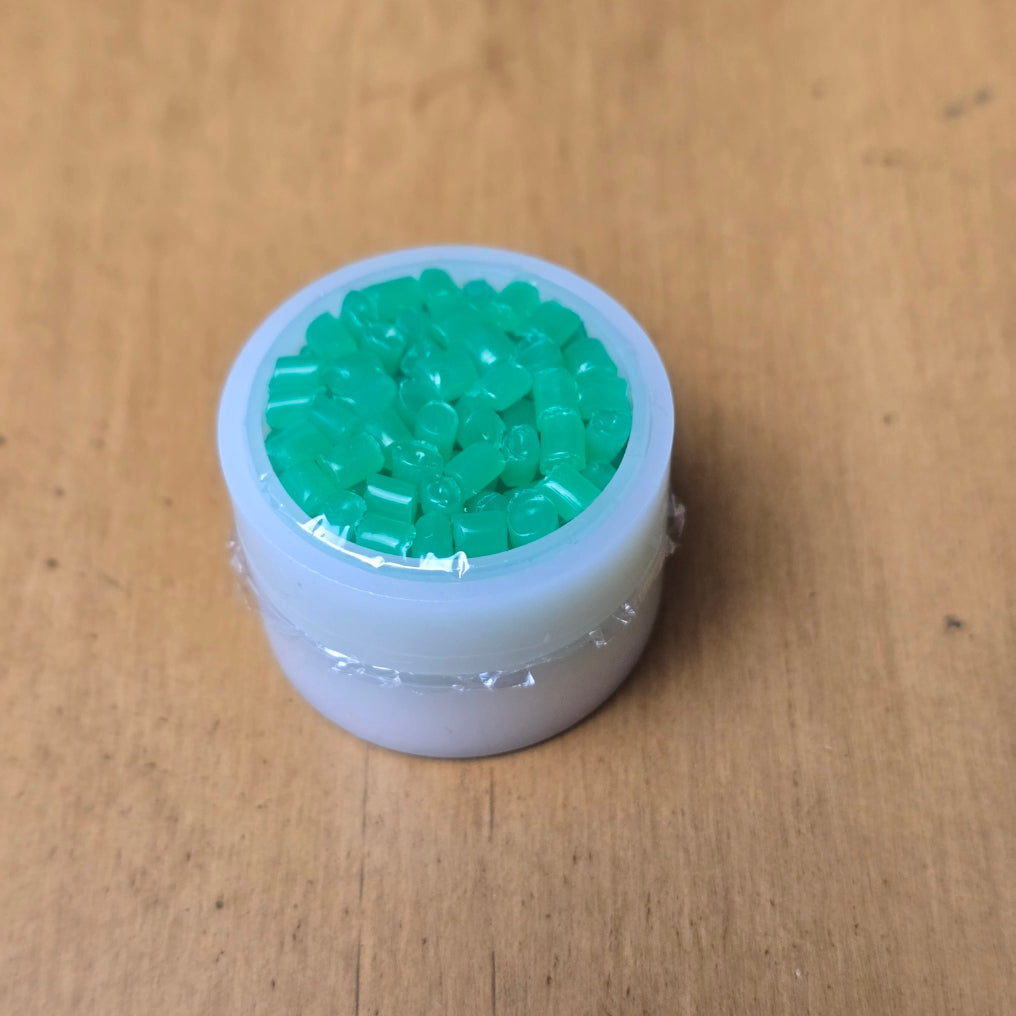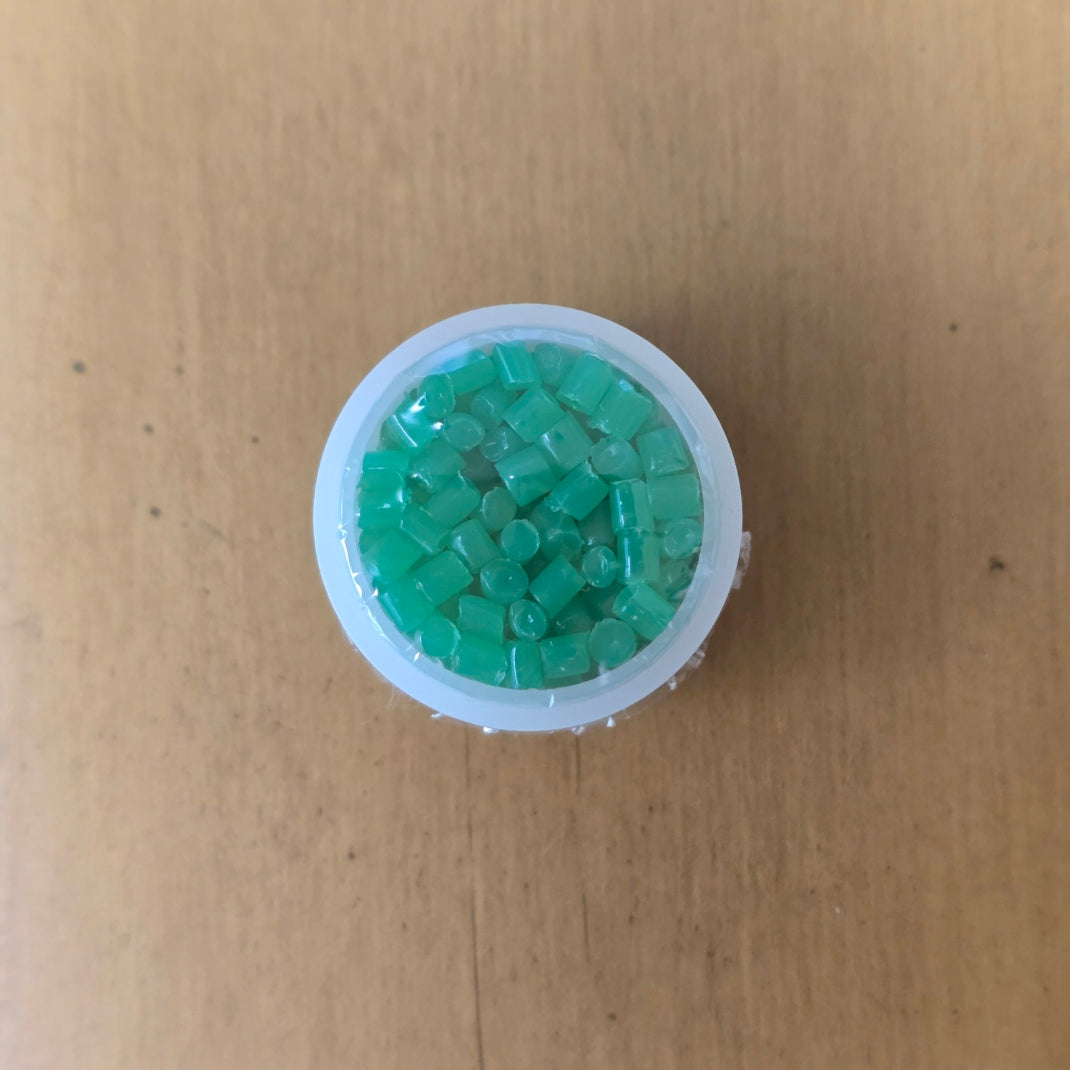
RoHS Reference Materials for XRF Testing
2 products
Showing 1 - 2 of 2 products
Certified reference materials and quality control standards for RoHS screening, WEEE applications, supplier verification, incoming inspection, and XRF testing of electrical and electronic equipment (EEE).
Alloy Geek offers RoHS reference materials for manufacturers, laboratories, recyclers, importers, suppliers, and quality-control teams using X-ray fluorescence (XRF) to screen materials for regulated and restricted substances.
Whether you are verifying incoming plastic components, screening electronics, evaluating supplier materials, or establishing an XRF quality-control program, the right reference materials help verify that your analyzer is producing reliable results at concentrations relevant to your application.
XRF Screening for RoHS Compliance
The European Union Restriction of Hazardous Substances (RoHS) Directive restricts hazardous substances in electrical and electronic equipment. RoHS requirements have also influenced electronics manufacturing and material-control programs throughout global supply chains.
For companies manufacturing, importing, supplying, or testing electrical and electronic products, this creates a practical problem:
How do you efficiently screen large numbers of components and materials for potentially restricted substances?
XRF provides a fast, non-destructive method for elemental screening and is widely suited to applications such as:
-
Incoming material inspection
-
Supplier quality control
-
Electronics manufacturing
-
Component screening
-
Plastic and polymer testing
-
Cable and wire screening
-
Solder and metal alloy testing
-
Finished-product inspection
-
Recycling and WEEE sorting
-
Regulatory screening programs
Reference materials provide known elemental concentrations that can be used to verify analyzer performance and support a consistent XRF screening program.
RoHS Restricted Substances and XRF
EU RoHS currently restricts ten substances in electrical and electronic equipment:
-
Lead (Pb)
-
Mercury (Hg)
-
Cadmium (Cd)
-
Hexavalent chromium [Cr(VI)]
-
Polybrominated biphenyls (PBB)
-
Polybrominated diphenyl ethers (PBDE)
-
Bis(2-ethylhexyl) phthalate (DEHP)
-
Butyl benzyl phthalate (BBP)
-
Dibutyl phthalate (DBP)
-
Diisobutyl phthalate (DIBP)
For most restricted substances, the maximum concentration value is 0.1% (1,000 mg/kg) by weight in homogeneous material. Cadmium has a lower maximum concentration value of 0.01% (100 mg/kg).
These concentration levels make properly selected reference materials particularly valuable. Standards near regulatory and internal screening thresholds can help users understand analyzer response where the measurement matters most.
What Can XRF Screen for?
XRF is an elemental analysis technique and is particularly useful for screening:
Lead (Pb)
XRF can directly detect and quantify lead in many metals, solders, plastics, polymers, and other materials.
Cadmium (Cd)
Cadmium is particularly important because its RoHS maximum concentration value is lower than those of many other restricted substances.
Mercury (Hg)
XRF can screen materials for elemental mercury content.
Chromium (Cr)
XRF measures total chromium. It does not determine chromium oxidation state and therefore cannot independently distinguish hexavalent chromium, Cr(VI), from other forms of chromium.
Bromine (Br)
XRF measures total bromine and can be used as a screening indicator for potentially restricted brominated compounds. It does not independently identify whether detected bromine is present as PBB, PBDE, or another brominated compound.
These distinctions are important when designing an XRF screening program. XRF is exceptionally useful for rapidly identifying materials that warrant additional investigation, but elemental screening and compound-specific regulatory testing are not the same thing.
Reference Materials for IEC 62321 XRF Screening
The IEC 62321 series addresses determination of certain substances in electrotechnical products.
IEC 62321-3-1 describes screening by X-ray fluorescence spectrometry and provides an important technical framework for the use of XRF in restricted-substance screening.
Reference materials with known concentrations of target elements can support:
-
XRF performance verification
-
Method development
-
Routine QC checks
-
Operator training
-
Screening-limit development
-
Analyzer comparison
-
Supplier inspection programs
-
Incoming material verification
A properly designed reference-material set should include appropriate matrices, elements, and concentration ranges for the products being screened.
Polymer Reference Materials for RoHS Screening
Plastics and polymers are one of the most important material classes for RoHS XRF screening.
Electrical and electronic equipment can contain numerous polymer components, including:
-
Cable insulation
-
Connectors
-
Housings
-
Switches
-
Circuit-board components
-
Molded plastic parts
-
Power-supply components
-
Internal electrical components
-
Polymer coatings
Polymer reference materials containing known concentrations of Pb, Cd, Cr, Br, Hg, and other elements can help evaluate XRF performance in a matrix representative of actual electronic components.
This is important because XRF response is matrix dependent. A metal reference standard is generally not an appropriate substitute for evaluating analyzer performance on a polymer application.
RoHS, WEEE and Electronics Recycling
RoHS and the Waste Electrical and Electronic Equipment (WEEE) regulatory framework address different parts of the electrical-product lifecycle but are closely related.
RoHS restricts hazardous substances in electrical and electronic equipment, while WEEE focuses on the collection, treatment, recovery, and recycling of waste electrical and electronic equipment.
For recyclers and material processors, XRF can provide rapid elemental information when evaluating electronic waste and recovered materials.
Applications can include screening:
-
E-waste plastics
-
Electronic components
-
Circuit-board materials
-
Cables and wiring
-
Metal components
-
Recovered polymer streams
-
Sorted recycling fractions
-
Incoming electronic scrap
Reference materials provide recyclers and processors with known samples for checking analyzer response before making screening or sorting decisions.
Supplier Verification and Incoming Inspection
RoHS compliance is ultimately a supply-chain problem as much as it is an analytical problem.
A finished electronic product can contain hundreds or thousands of individual components and homogeneous materials sourced from multiple suppliers.
XRF allows manufacturers and quality-control teams to rapidly screen incoming materials rather than relying exclusively on supplier documentation.
A typical incoming-inspection program might use XRF to screen:
Plastic housings for Pb, Cd, total Cr, Br, and other elements.
Cables and insulation for restricted-element indicators.
Solder for Pb and alloy composition.
Metal components for Pb, Cd, Cr, and material identification.
Connectors and electronic components for potentially restricted elements.
Reference materials can then be measured periodically to confirm that the analyzer continues to perform as expected.
Reference Materials Near Regulatory Limits
For regulatory screening applications, simply having a standard containing a very high concentration of an element is not always sufficient.
Reference materials near relevant screening or decision levels can be particularly useful because they allow users to evaluate analyzer performance in the concentration range where a screening decision becomes important.
For example, a RoHS XRF reference-material set may include:
-
A low or blank material
-
Material below a screening threshold
-
Material near an important concentration level
-
Material above that level
-
Higher-concentration material for additional performance verification
Using multiple concentrations helps establish how an analyzer responds across a range rather than merely confirming that it can detect a heavily contaminated sample.
RoHS Screening with Handheld and Benchtop XRF
Reference materials in this collection may be useful with handheld and benchtop XRF systems from Thermo Scientific Niton, Evident/Olympus, Hitachi, Bruker, SciAps and other XRF manufacturers.
Applications range from portable incoming inspection with handheld XRF to dedicated benchtop XRF screening in a quality laboratory.
The appropriate reference materials depend on the analyzer configuration, measurement mode, sample matrix, elements of interest, and screening requirements.
RoHS, REACH and Other Restricted-Substance Requirements
RoHS does not exist in isolation.
Manufacturers and importers may encounter multiple restricted-substance requirements depending on the product and market. These can include EU RoHS, WEEE requirements, REACH restrictions and other national or regional environmental and product regulations.
These regulations do not necessarily restrict the same substances, use the same concentration limits, or require the same analytical methods.
For that reason, reference materials should be selected around the specific material, target elements, applicable requirements, and analytical method rather than simply choosing a sample labeled "RoHS."
XRF Screening Is Not the Same as Complete RoHS Compliance Testing
XRF is an extremely useful screening technique, but its capabilities need to be understood correctly.
XRF identifies and measures elements.
For example, detecting chromium does not by itself establish that the chromium is hexavalent chromium. Likewise, measuring bromine does not identify the specific brominated compound responsible for that bromine.
The four restricted phthalates are also organic compounds and are not directly determined by conventional elemental XRF screening.
XRF is therefore frequently used as a screening and risk-identification tool, with additional laboratory analysis used when compound-specific identification or confirmation is required.
Reference materials help make that screening process more reliable by providing known materials against which analyzer performance can be evaluated.
Choosing the Right RoHS Reference Material
When selecting a reference material, consider four things:
Matrix – Are you screening polymers, metals, solder, glass, coatings, or another material?
Elements – Which elements must your XRF screening program identify?
Concentration – Do you need a general analyzer check or material near an important screening or regulatory concentration?
Application – Are you performing incoming inspection, supplier verification, manufacturing QC, recycling, method development, or laboratory testing?
For many customers, the best solution is not a single reference material but a small set covering multiple concentrations in the appropriate matrix.
Need Help Selecting RoHS Reference Materials?
Not sure which reference materials fit your XRF analyzer and RoHS screening application?
Contact Alloy Geek.
Tell us what materials you're testing, the elements you're screening, your XRF analyzer, and what you're trying to accomplish. We can help identify reference materials appropriate for your application.