Consumer Goods Reference Materials
3 products
Showing 1 - 3 of 3 products
Certified reference materials and quality control standards for XRF testing of consumer goods, plastics, polymers, toys, jewelry, coatings, and manufactured products.
Alloy Geek offers reference materials designed to help laboratories, manufacturers, inspectors, and quality-control teams verify XRF analyzer performance when screening consumer products for regulated and restricted elements. These materials provide known elemental concentrations that can be used for analyzer verification, method development, operator training, and routine quality control.
Reference Materials for Consumer Product XRF Testing
Handheld XRF has become an important screening tool for rapidly identifying potentially hazardous or restricted elements in consumer products. Unlike laboratory methods that may require destructive sample preparation, XRF can often screen finished products, components, plastics, coatings, and other materials directly.
Reference materials provide a known composition against which analyzer results can be compared. They are particularly useful when establishing an XRF screening program or verifying that an analyzer continues to perform properly at concentrations relevant to consumer-product testing.
Consumer goods reference materials may be useful for screening applications involving:
- Toys and children's products
- Plastics and polymers
- Jewelry and accessories
- Painted and coated products
- Packaging materials
- Electrical and electronic components
- Household goods
- Textiles and product components
- Imported manufactured goods
- Raw materials used in consumer products
Screening for Lead, Cadmium, Chromium, Bromine and Other Elements
Consumer-product regulations can restrict different substances depending on the product, material, and jurisdiction. XRF screening programs therefore frequently focus on several potentially regulated elements.
Common XRF screening targets include:
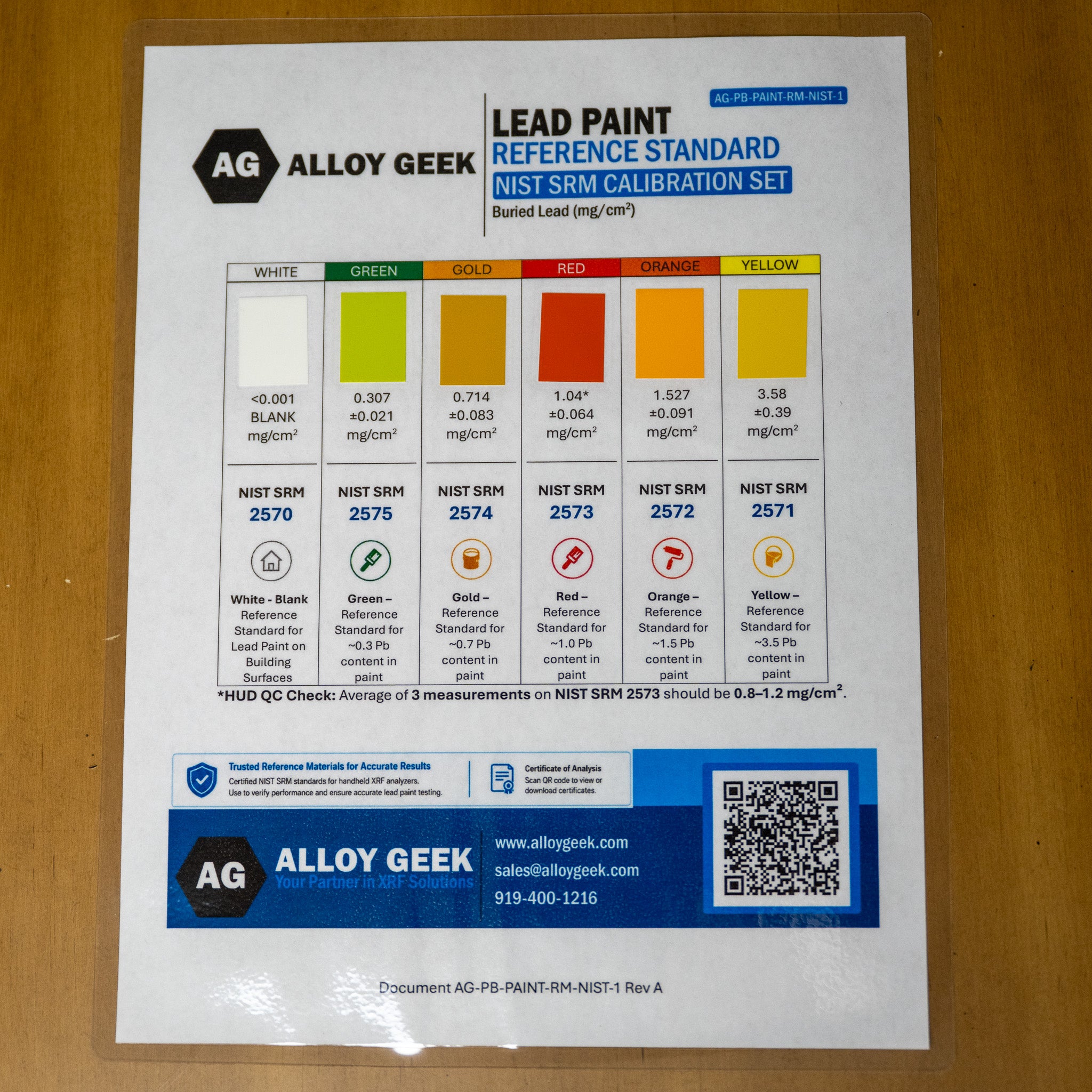
Lead (Pb) – Frequently screened in paints, coatings, plastics, jewelry, toys, and other consumer products.
Cadmium (Cd) – May be encountered in pigments, plastics, jewelry, coatings, and other manufactured materials.
Chromium (Cr) – Used in pigments, coatings, metals, and numerous industrial materials. XRF measures total chromium and does not independently determine chromium oxidation state.
Bromine (Br) – Often used as an indicator for the possible presence of brominated flame retardants in polymers and electronic components.
Mercury (Hg) – Restricted in a variety of products and electrical or electronic applications.
Other elements may also be important depending on the product and applicable testing requirements.
Polymer and Plastic Reference Materials
Plastics present a particularly important challenge for XRF analysis because elemental response depends strongly on the sample matrix.
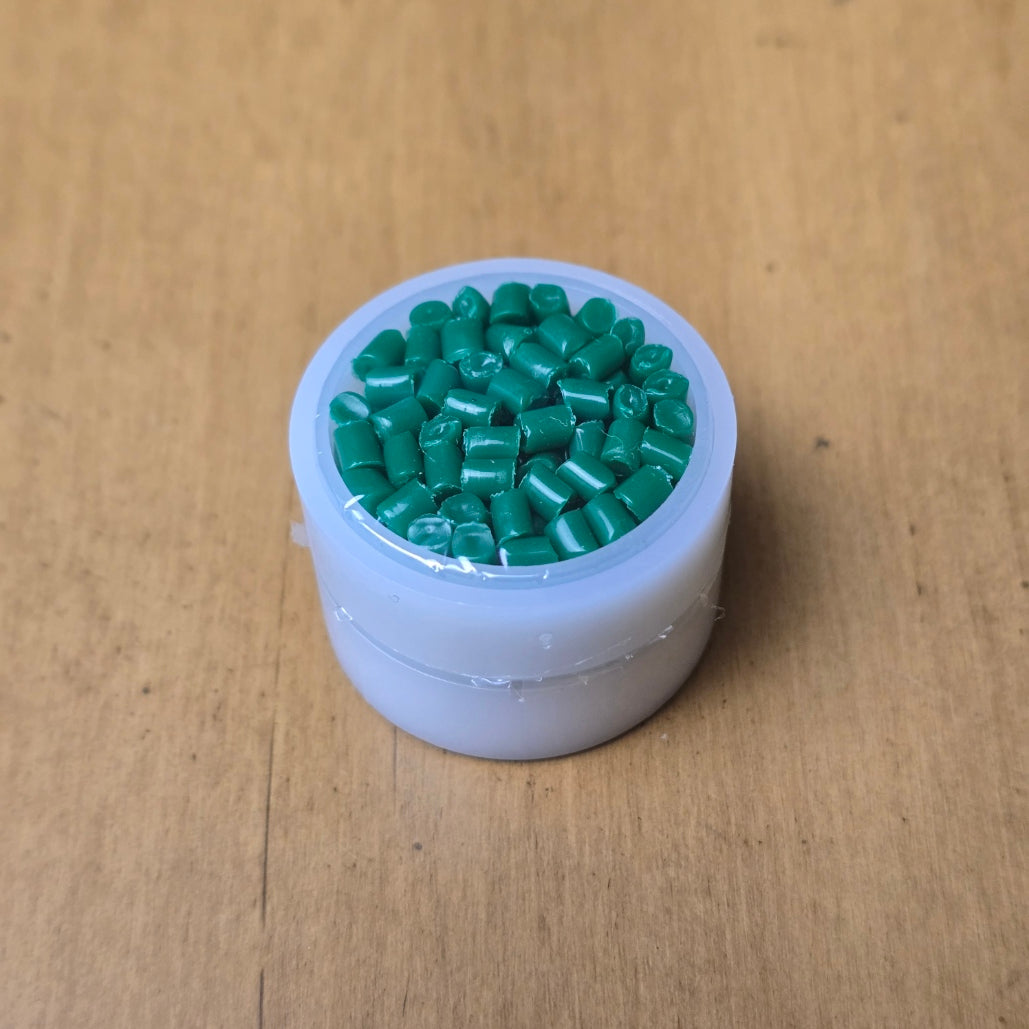
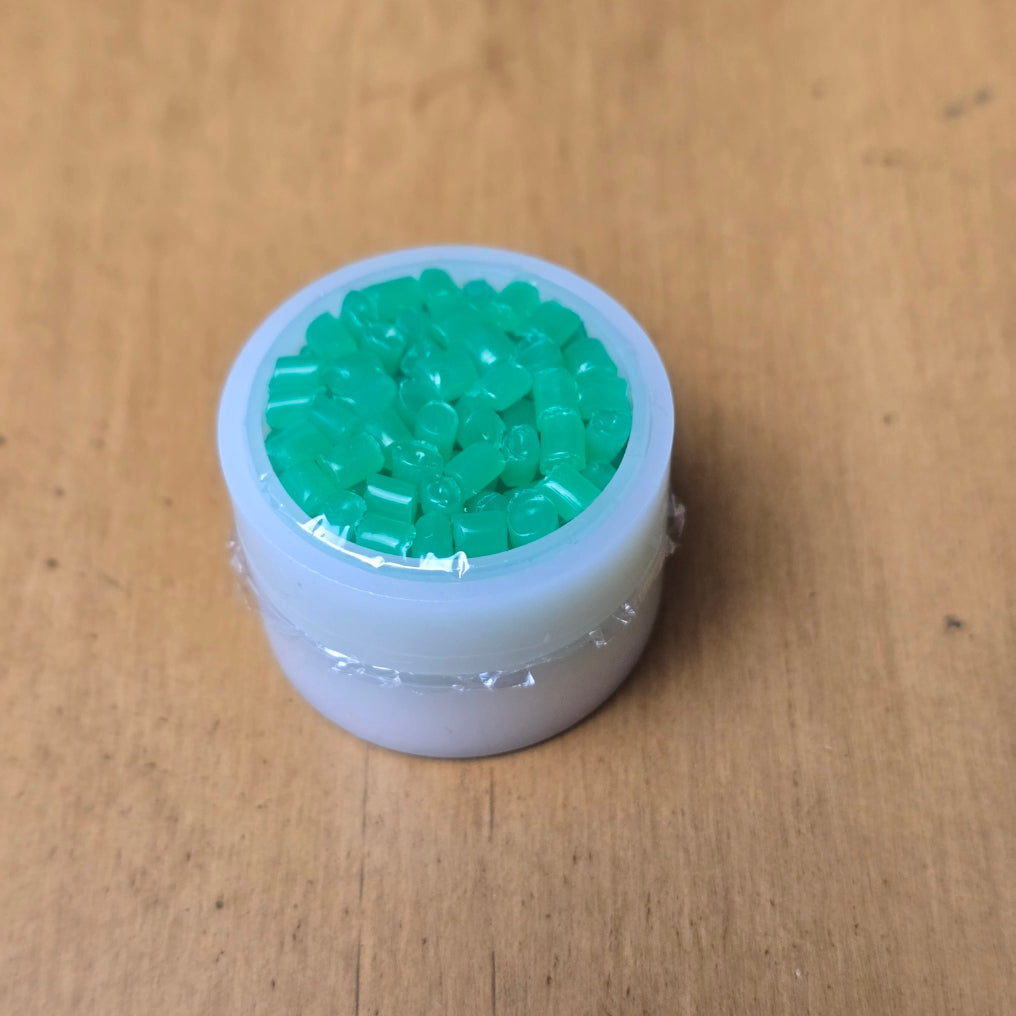
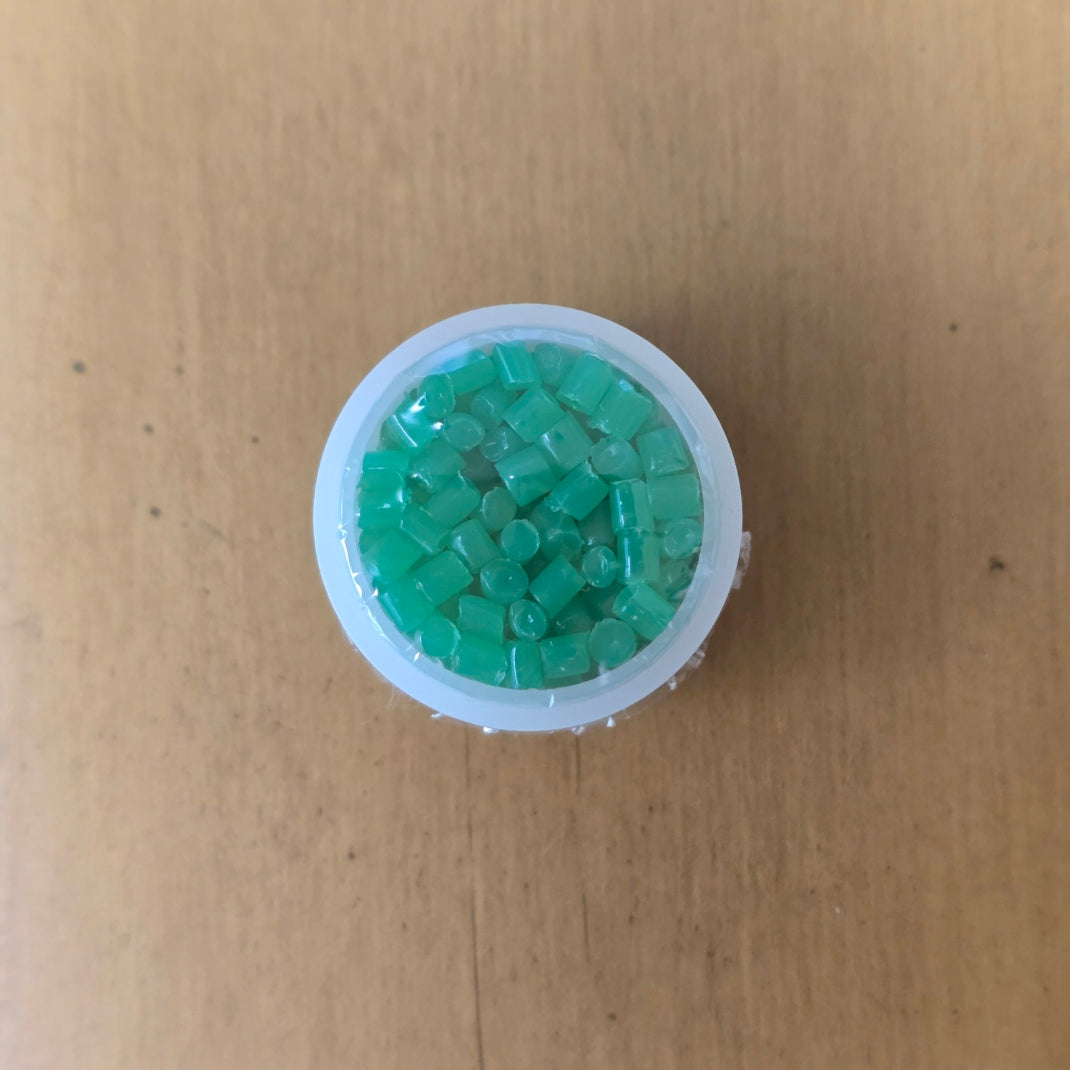
Polymer reference materials containing certified or characterized concentrations of regulated elements allow users to evaluate analyzer performance in a matrix that more closely resembles real consumer products.
These standards can be particularly useful for:
- Analyzer performance verification
- Calibration checks
- Incoming material inspection programs
- Pass/fail screening method development
- Operator competency checks
- Comparing different XRF analyzers
- Establishing internal QC procedures
Whenever possible, reference materials should be selected with both the target element concentration and sample matrix in mind.
Reference Materials for Handheld XRF
Many of the reference materials in this collection are particularly useful with handheld XRF analyzers from manufacturers such as Thermo Scientific Niton, Evident/Olympus, SciAps, Hitachi, Bruker, Viken Detection, and other XRF manufacturers.
Reference materials can help answer a simple but important question:
Is the analyzer correctly identifying and measuring the elements that matter for this application?
A set containing multiple concentration levels can provide considerably more information than a single verification sample. Low, intermediate, and elevated concentrations can be used to evaluate analyzer response across the range encountered during actual product screening.
Consumer Goods vs. RoHS Reference Materials
Consumer-product testing and RoHS screening frequently overlap, particularly when plastics and electronic components are involved, but they are not identical applications.
Our Consumer Goods Reference Materials collection covers standards applicable to the broader consumer-product testing market, including toys, jewelry, plastics, coatings, packaging, and manufactured products.
For customers specifically screening electrical and electronic equipment for substances addressed by the Restriction of Hazardous Substances (RoHS) framework, see our RoHS Reference Materials collection.
Some reference materials appear in both collections because they are useful for both applications.
Choosing the Right Consumer Goods Reference Material
The best reference material depends on what you are testing and what you need to verify.
When selecting a standard, consider:
Matrix: Polymer, plastic, metal, glass, coating, or another material.
Elements: Pb, Cd, Cr, Br, Hg, or other elements relevant to your screening program.
Concentration: Ideally, standards should include concentrations near the decision levels important to your application.
Analyzer: Different XRF analyzers, detector configurations, calibrations, and measurement modes can produce different analytical capabilities.
Purpose: A standard used for daily analyzer verification may be different from one selected for method development or quantitative calibration.
Need Help Selecting Reference Materials?
Not sure which reference material is appropriate for your XRF analyzer or consumer-product testing application?
Contact Alloy Geek. Tell us what you're testing, the elements you need to measure, your approximate concentration range, and the XRF analyzer you're using. We can help identify reference materials that fit your application.