Handheld XRF Analyzers for RoHS Compliance
8 products
Showing 1 - 8 of 8 products
Find the right portable XRF analyzer to screen restricted substances in electronics, components, and materials - fast, non-destructive, and ready for your compliance work.
What Is a RoHS XRF Analyzer?
A handheld XRF analyzer for RoHS compliance is a portable, non-destructive instrument that rapidly detects restricted substances in electronics and manufactured goods. These analyzers - sometimes called XRF guns or portable XRF spectrometers - allow inspectors, quality engineers, and compliance teams to screen materials and components on the production floor, at incoming inspection, or directly at a supplier without sending samples to a lab.
RoHS regulations restrict the use of hazardous substances including lead (Pb), cadmium (Cd), mercury (Hg), and hexavalent chromium (Cr VI) in electrical and electronic equipment. A handheld XRF analyzer provides immediate, actionable results so teams can identify compliance risks before they become costly problems.
XRF is recognized as a screening method under IEC 62321-3-1 and ASTM F2617-15, the official standards that describe procedures for analyzing lead, cadmium, chromium, mercury, and total bromine in electronic products. It is the most widely used first-line tool in electronics compliance programs worldwide.
Common RoHS XRF Testing Applications
Electronics and Circuit Board Screening
One of the most common RoHS applications is verifying that solder joints are truly lead-free. A handheld XRF analyzer can test solder, connectors, and components directly on assembled boards without damaging the product. This is critical for identifying non-compliant lead solder that could result in rejected shipments or regulatory action.
Incoming Material and Component Verification
XRF analyzers allow quality teams to screen connectors, cables, housings, fasteners, and metal parts for restricted elements before they enter production. Rather than relying solely on supplier declarations or certificates, incoming inspection with XRF provides real data at the point of receipt.
Material and Surface Compliance Screening
RoHS XRF analyzers can identify lead in brass alloys, cadmium in plated components, and chromium in treated surfaces. This type of rapid surface-level screening is critical for flagging compliance risks in mixed materials and complex assemblies.
Supplier Audits
Portable XRF analyzers are used during supplier audits to spot-check solder, connectors, or plated parts at the source. On-site XRF testing allows companies to validate compliance in real time rather than relying entirely on documentation - helping reduce risk and improve accountability across the supply chain.
Consumer Products and Toys
Handheld XRF analyzers are widely used to screen children's toys and consumer goods for lead, cadmium, and other restricted substances. Painted surfaces, metal components, plastic parts, apparel hardware, zippers, buttons, and sporting goods can all contain elements that exceed regulatory limits. This is especially important for importers, distributors, and manufacturers responsible for product safety in regulated markets. SciAps instruments are also accepted for screening under ASTM F963, the US toy safety standard.
Restricted Substances Detected by XRF
RoHS handheld XRF analyzers are configured to detect the primary restricted elements regulated under RoHS directives:
- Lead (Pb) - commonly found in solder, brass alloys, and pigments; RoHS threshold 1000 ppm
- Cadmium (Cd) - found in platings, pigments, and stabilizers; RoHS threshold 100 ppm
- Mercury (Hg) - found in certain switches and lighting components; RoHS threshold 1000 ppm
- Chromium (Cr) - screened for total chromium presence; RoHS threshold 1000 ppm
- Bromine (Br) - used as a proxy indicator for brominated flame retardants (PBB/PBDE); RoHS threshold 1000 ppm
- Chlorine (Cl) - screened as part of halogen-free initiatives alongside bromine
Important note on Cr VI: XRF measures total elemental chromium. It cannot distinguish hexavalent chromium (Cr VI) from other valence states. Samples exceeding screening thresholds for chromium may require wet chemistry confirmation to determine Cr VI content specifically.
Important note on pass/fail zones: XRF screening results near regulatory thresholds are often reported as inconclusive rather than a hard pass or fail. For RoHS, IEC guidelines apply a 30% buffer around the action level - for lead, that means results between 700 ppm and 1300 ppm may require additional analysis. Understanding this zone is important when building a screening program.
Halogen-Free Screening
Beyond standard RoHS elements, many compliance programs now require halogen-free screening. The accepted industry definition of halogen-free is:
- Chlorine (Cl): 900 ppm maximum
- Bromine (Br): 900 ppm maximum
- Total halogens: 1500 ppm maximum
Handheld XRF analyzers configured for RoHS can typically also be set up for halogen-free screening in the same instrument, covering both chlorine and bromine in plastics and polymer components. Some programs additionally screen for antimony (Sb), which is commonly used as a synergist with brominated flame retardants. Current analyzers from SciAps and Evident allow users to add elements like Sb and adjust pass/fail thresholds without purchasing new software or a new instrument.
How to Choose the Right RoHS XRF Analyzer
The best handheld XRF analyzer for RoHS testing depends on your detection limits, the types of materials you are screening, and the volume of your inspection work. Key factors to consider:
Detection capability for regulated elements Look for analyzers with proven low detection limits for Pb, Cd, Hg, and Cr. Silicon drift detectors (SDD) provide significantly faster and more accurate results compared to older Si-PIN detectors. As a practical reference, modern SDD-equipped analyzers can achieve polymer Pb detection limits of 2 to 5 ppm - well below the 1000 ppm RoHS threshold - in 30 seconds or less.
Repeatability and consistency For regulatory screening near threshold values, consistent results across repeated measurements matter. The inconclusive zone built into RoHS screening standards means that instruments with poor repeatability will produce more inconclusive results, slowing down your inspection program. Axon technology in Evident Vanta analyzers is specifically designed for test-to-test and instrument-to-instrument repeatability.
Beam size and small component capability Standard XRF beam diameters of 6 to 8 mm can overlap adjacent components on a populated board, averaging surrounding materials into the result. If you are screening densely populated PCBs or small surface mount components, beam size matters. See the Small Spot section below for a full explanation of how different manufacturers address this.
Ease of use for inspection work Consider battery life, user interface, and whether the unit supports configurable RoHS test methods. For high-volume inspection jobs, ergonomics and reporting integration matter. SciAps analyzers run on Android with configurable software that allows users to add elements and adjust pass/fail thresholds as regulations evolve. Evident Vanta analyzers offer Wi-Fi, Bluetooth, and cloud-ready data export. Niton analyzers have a long track record of field reliability and ease of deployment.
Durability for demanding environments Evident Vanta Max and Core models are drop tested to MIL-STD-810G and rated IP55 for dust and water resistance. If your inspection work takes place in warehouse, dock, or manufacturing floor environments, ruggedness is worth factoring into your decision.
Small Spot Analysis for Small Components and Circuit Boards
One of the most practical challenges in RoHS screening is targeting individual components on a populated circuit board. A standard handheld XRF beam diameter of 6 to 8 mm can overlap adjacent components, solder pads, or substrate material - averaging those materials into the result and potentially masking a non-compliant reading.
Each manufacturer has addressed this differently.
Niton and Evident Vanta offer optional collimation that physically reduces the x-ray beam to 3 mm, allowing precise targeting of small components, individual solder joints, and surface mount devices on densely populated boards. On Niton analyzers, this is a factory-installed hardware option that must be specified at time of purchase. On Vanta Max and Core models, collimation to 3 mm is listed as an optional accessory.
SciAps takes a different approach. Their instrument geometry achieves a native 4 mm beam spot without a collimator. Their position is that collimators reduce the number of X-rays reaching the sample, which increases required measurement time. A full-power 4 mm beam delivers faster results without that tradeoff.
In practice, both approaches allow for more precise component-level screening than a standard 8 mm beam. If small component work is a regular part of your RoHS jobs, beam size and collimation options are worth discussing before you select a model.
Analyzer Models for RoHS Screening
Thermo Scientific Niton
Niton analyzers have a long track record in RoHS compliance programs and are widely deployed in electronics manufacturing and consumer product testing environments.
- Niton XL2 Plus - entry level, reliable screening for standard RoHS applications
- Niton XL5e - premium, faster results and improved detection limits over the XL2
- Niton XL5 Plus - high-end premium, high-throughput inspection with advanced performance for demanding compliance programs, can add collimator
Evident (Olympus) Vanta
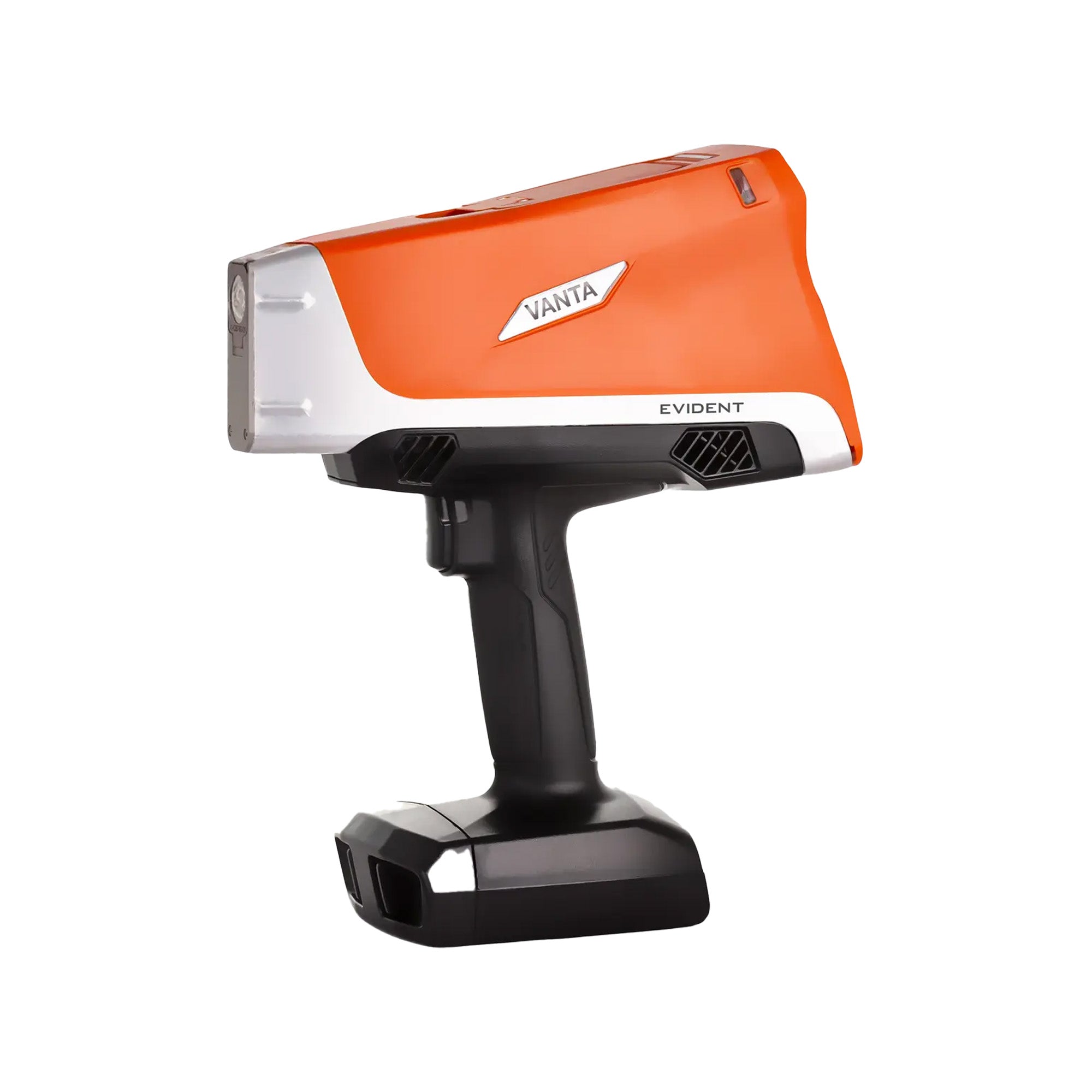
Vanta analyzers are built around Evident's proprietary Axon technology, which uses ultra-low-noise electronics for high X-ray counts per second and strong test-to-test repeatability. All Max and Core models are MIL-STD-810G drop tested and IP55 rated.
- Vanta Element - entry level, straightforward RoHS screening in a rugged, field-ready package
- Vanta Element-S - mid-tier, improved speed and sensitivity over the base Element
- Vanta Core - premium, high-performance detection with Axon technology for demanding compliance work; optional 3 mm collimation available
- Vanta Max - high-end premium, top-of-line sensitivity and speed with large-area SDD detector and graphene window; GPS, hot-swap battery, and optional 3 mm collimation
SciAps X-Series
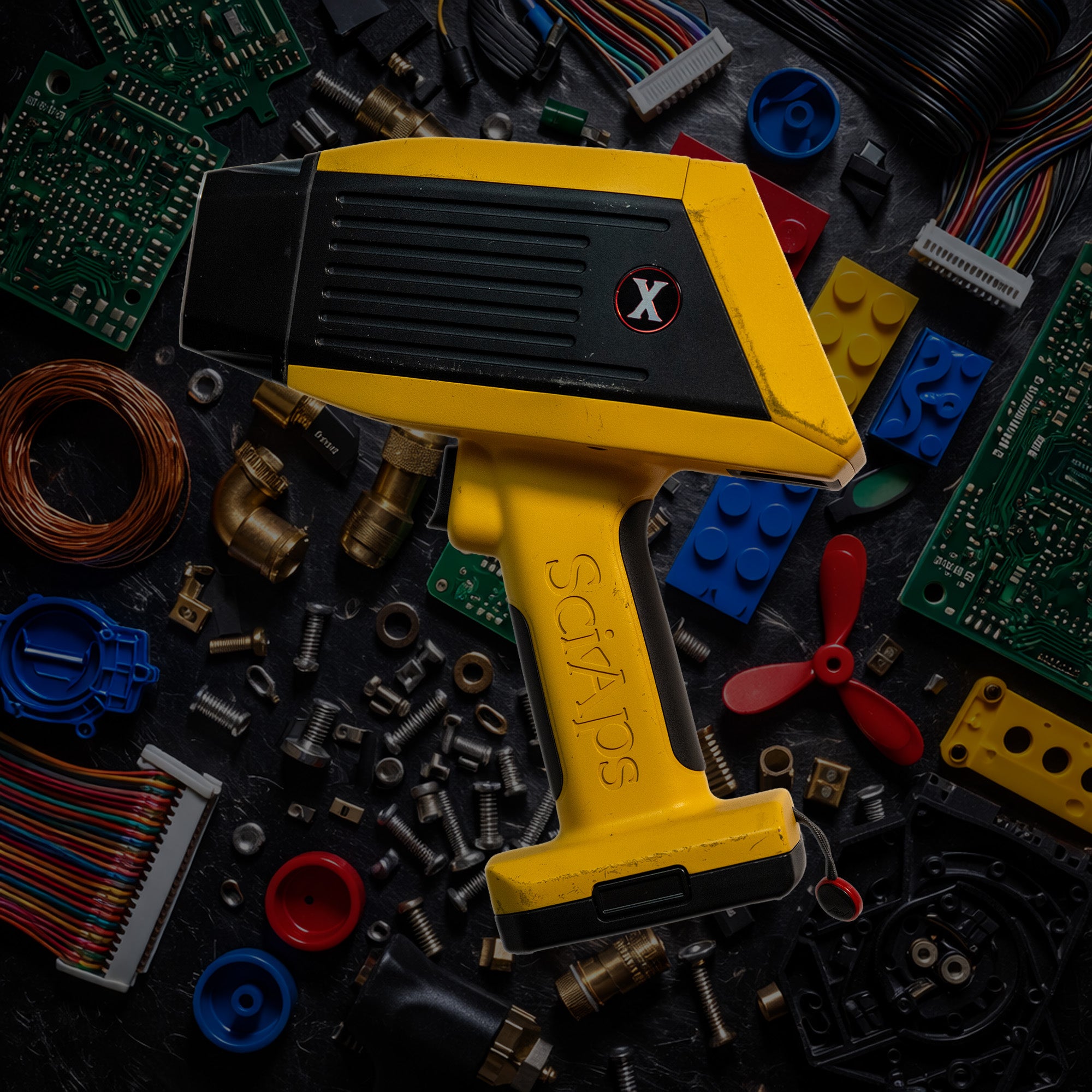
SciAps analyzers run on Android and are designed for compliance testing throughput. Their RoHS app automatically identifies material type without requiring operators to switch modes or calibrations, and allows users to add elements and adjust pass/fail thresholds as regulations change. All X-Series models achieve a native 4 mm beam spot without a collimator.
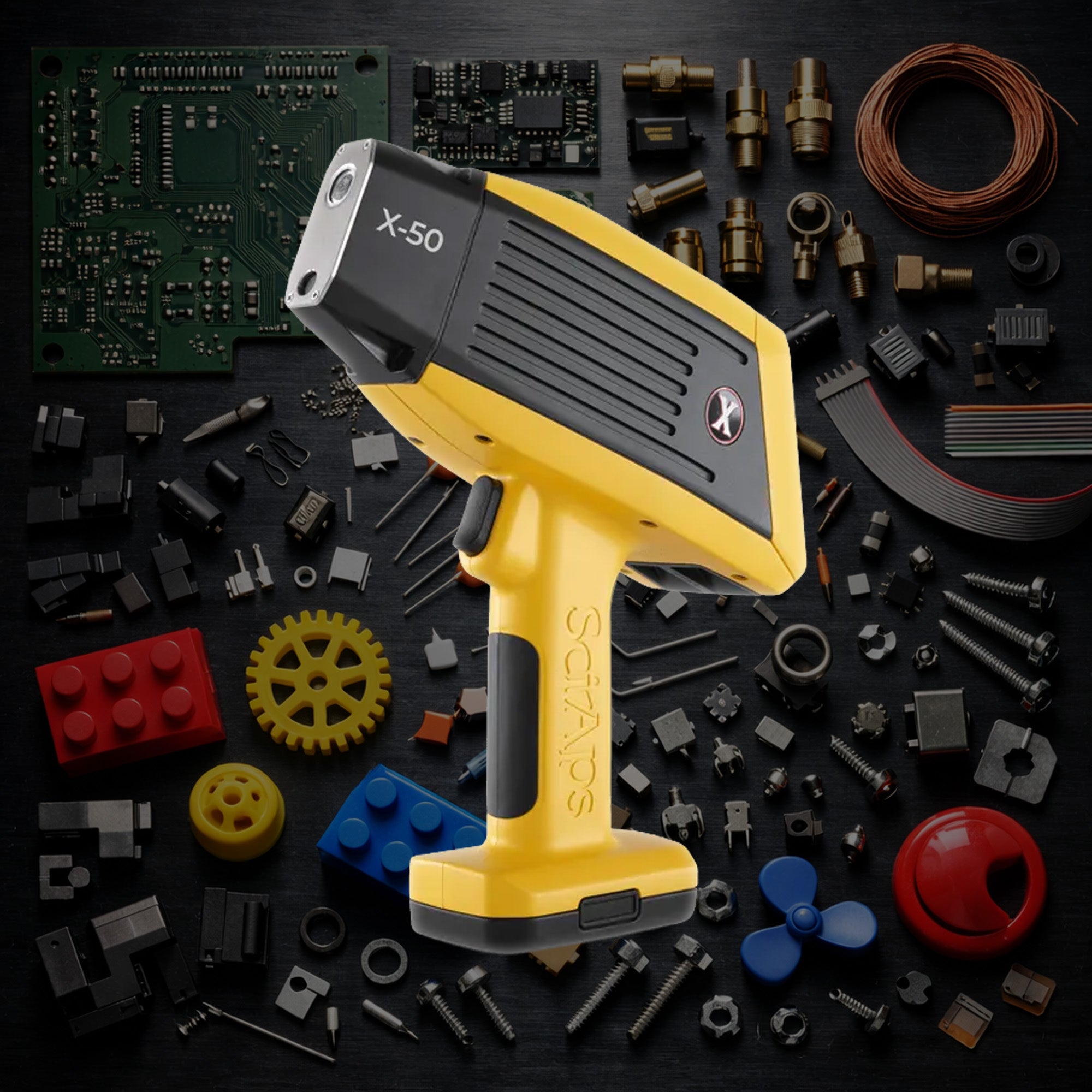
- SciAps X-50 - entry level, capable for standard RoHS and WEEE screening with integrated camera and Android platform
- SciAps X-200 - mid-range, stronger detection limits, improved heat dissipation for high-throughput jobs, and updated electronics for reduced power consumption
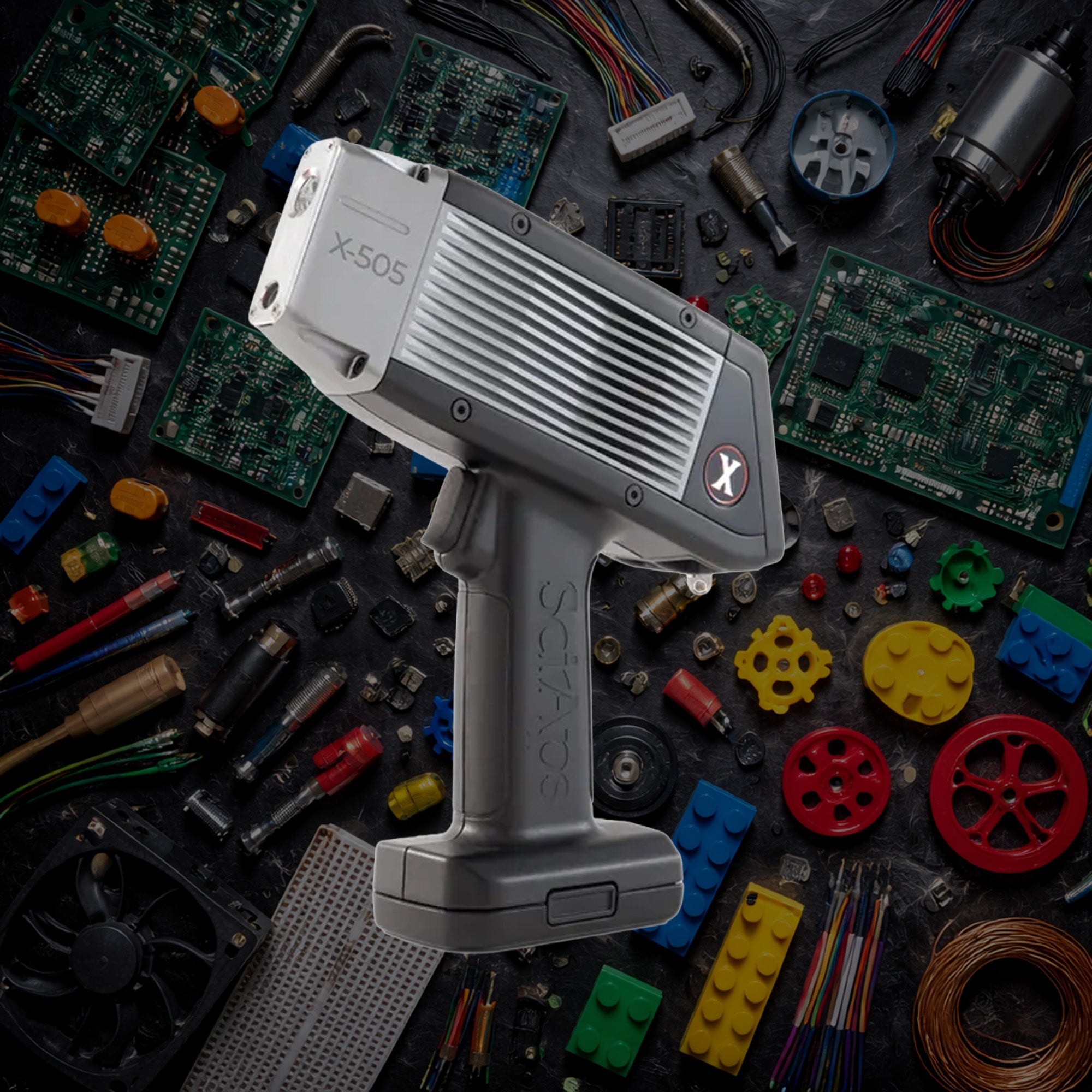
- SciAps X-505 - premium, at 2.75 lbs the lightest analyzer in its class; narrow form factor for accessing tight test locations; 1 to 2 second results for maximum throughput
Browse the analyzers in this collection and use the filters to narrow by brand, detector type, or application. Not sure which model fits your work? Request a quote and we will match you with the right instrument.
Buying vs. Renting a RoHS XRF Analyzer
Buy when RoHS screening is an ongoing part of your quality or compliance program. High-volume incoming inspection, continuous production monitoring, and routine supplier audits make ownership the more cost-effective choice over time.
Rent when you need coverage for a short-term project, an audit, or want to evaluate a model before committing to purchase. Our rental fleet includes the same analyzers available for sale, calibrated and configured for RoHS applications.
Explore RoHS XRF Analyzer Rentals at Alloy Geek - weekly and monthly options available.
Why Buy from Alloy Geek
- XRF instruments inspected, tested, and verified before shipping
- Honest condition grading - no surprises on arrival
- Expert guidance to match the right analyzer to your application
- Support from people who actually use XRF, not just sell it
- Flexible options: buy outright, or ask about rent-to-own
Frequently Asked Questions
Can a handheld XRF analyzer confirm RoHS compliance?
XRF is a screening tool. It provides rapid, non-destructive elemental data that helps identify materials likely to exceed RoHS thresholds. For regulated materials near threshold values, or for substances like Cr VI that require speciation, laboratory confirmation may still be required. XRF is the standard first-line screening method used across the electronics supply chain, recognized under IEC 62321-3-1 and ASTM F2617-15.
What RoHS thresholds does XRF screen against?
Common RoHS thresholds are 1000 ppm for lead, mercury, chromium, and bromine, and 100 ppm for cadmium. Most handheld XRF analyzers with SDD detectors can reliably screen at these levels in 30 seconds or less. Results near thresholds may fall into an inconclusive zone and require additional testing.
What is the difference between RoHS and halogen-free screening?
RoHS restricts specific hazardous substances including lead, cadmium, mercury, and chromium. Halogen-free screening goes further, targeting chlorine and bromine content in materials regardless of the specific compound. Many compliance programs now require both. Most current handheld XRF analyzers can be configured to cover both in the same instrument.
How long does a RoHS XRF measurement take?
Typical screening measurements range from 10 to 60 seconds per point depending on the analyzer, detector type, and material being tested. High-performance SDD analyzers like the SciAps X-505 can deliver results in 1 to 2 seconds under the right conditions. Many RoHS inspection programs use 30-second reads as a standard baseline.
Do these analyzers come with a RoHS test method pre-loaded?
Many units in our inventory come configured with RoHS or consumer product methods. If you need a specific method configuration, contact us before ordering and we will confirm what is loaded on the unit.
What is the difference between Si-PIN and SDD detectors for RoHS work?
Si-PIN detectors were the standard in earlier-generation XRF analyzers. Silicon drift detectors (SDD) offer significantly faster measurement times and lower detection limits - particularly important for cadmium, which has a stricter 100 ppm RoHS threshold. For serious compliance work, an SDD-equipped analyzer is the better choice.
Need help selecting the right analyzer? Contact us and we will point you in the right direction.