

Description
Fast, Reliable Alloy Identification & Metal Sorting
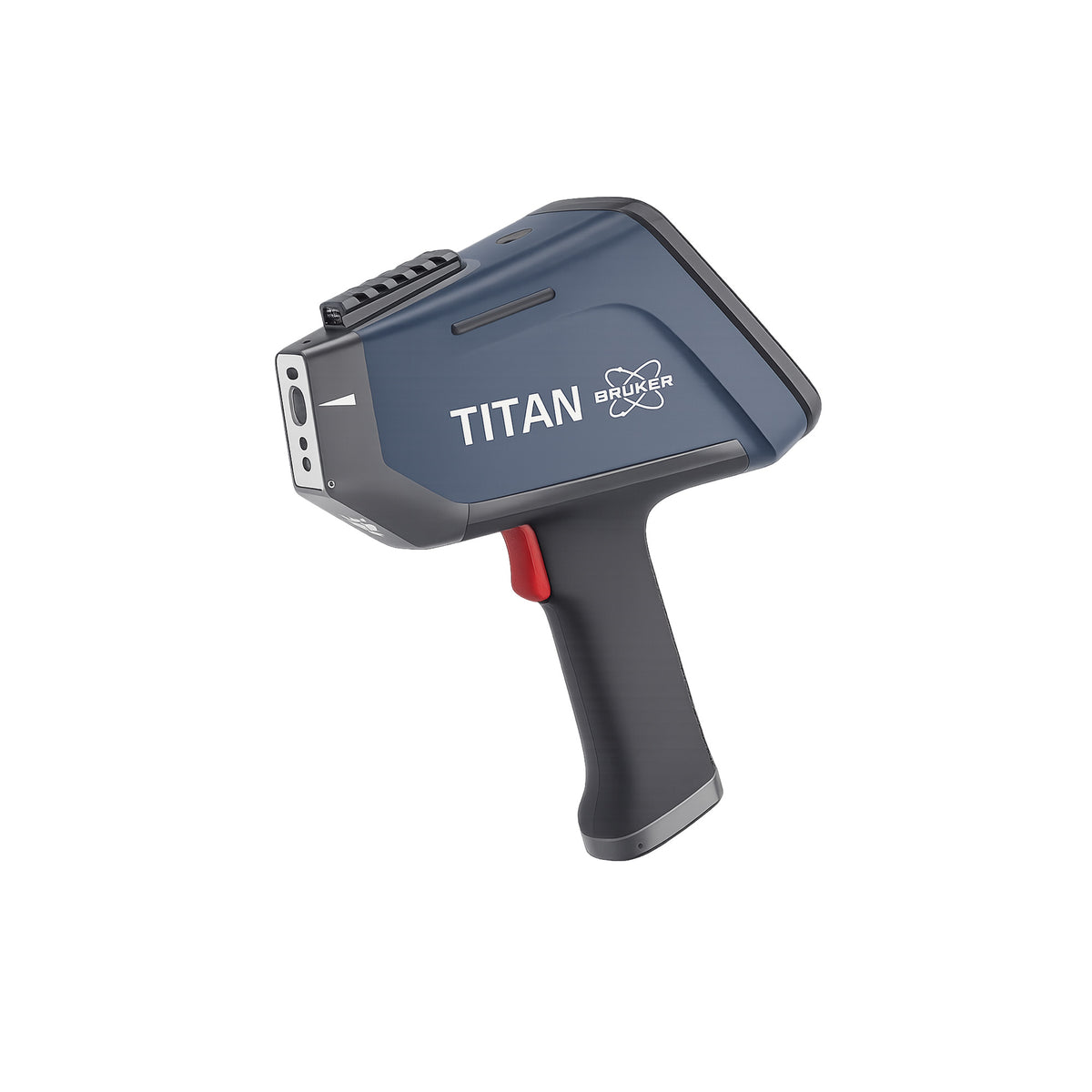
The Bruker TITAN 350 Handheld XRF Analyzer – Alloy is configured specifically for alloy identification, metal sorting, scrap recycling, incoming material inspection, and general metals analysis.
Built around a 40 kV, 2.5 W rhodium (Rh) X-ray tube and large-area silicon drift detector (SDD), the TITAN 350 provides fast, nondestructive elemental analysis in a rugged handheld platform. Its graphene detector window enhances light-element performance, while Bruker's TITAN Detector Shield helps protect the detector against accidental puncture during demanding field use.
This configuration includes Bruker's dedicated TITAN 350 Alloy calibration package, providing automated and alloy-family-specific analysis for a broad range of ferrous and nonferrous metals.
Bruker TITAN Series Brochure
Looking for additional technical information? View the official Bruker TITAN brochure for specifications, features, and platform information.
View the Bruker TITAN 350 Brochure
Built for Alloy Identification
When you need to know what a metal is, the TITAN 350 provides elemental chemistry and alloy identification directly at the point of inspection.
Point the analyzer at the material, initiate the test, and use the resulting chemistry and grade information to make sorting, purchasing, receiving, or material verification decisions.
The TITAN 350 Alloy configuration is designed for applications including:
- Scrap metal sorting
- Alloy grade identification
- Stainless steel identification
- Low-alloy and tool steel sorting
- Nickel and cobalt alloy identification
- Copper, brass and bronze sorting
- Zinc alloy identification
- Titanium alloy identification
- Aluminum and magnesium alloy analysis
- Incoming material inspection
- Material verification
- Metal purchasing and receiving
- Manufacturing and quality control
Dedicated Alloy Calibration Package
This TITAN 350 configuration includes Bruker's Alloy calibration package with heavy-element capability from titanium (Ti) through uranium (U).
The package includes Auto mode along with user-selectable, type-specific calibrations for:
| Alloy Family | Typical Applications |
|---|---|
| Stainless Steels | Grade identification and sorting |
| Tool Steels | Tool and high-alloy steel identification |
| Low Alloy Steels | Cr-Mo and other alloy steel identification |
| Nickel Alloys | Nickel superalloy and corrosion-resistant alloy sorting |
| Cobalt Alloys | Cobalt-base alloy identification |
| Copper Alloys | Brass, bronze and other copper-base alloys |
| Zinc Alloys | Zinc-base material identification |
| Light Alloys | Grade identification based on measurable elements from Ti–U |
| Other Alloys | General calibration for additional alloy types |
An alloy check sample is also included with the calibration package.
Auto Mode or Alloy-Specific Analysis
Not every operator knows which analytical calibration should be selected before testing an unknown metal.
That's where Auto mode becomes particularly useful.
For routine sorting and unknown-material identification, Auto mode provides a streamlined workflow. More experienced operators can also select the appropriate type-specific calibration when working with a known alloy family.
This gives the TITAN 350 flexibility for both high-throughput sorting and more controlled alloy analysis.
Designed for Scrap & Metal Recycling
For scrap processors, correctly identifying material can directly affect its value.
Stainless steel, nickel alloys, cobalt alloys, copper alloys, and other specialty materials can look remarkably similar while having very different compositions and values.
The TITAN 350 allows operators to analyze unknown material directly in the yard and use elemental chemistry and grade identification to help:
Separate mixed alloys → identify higher-value material → reduce sorting errors → improve material segregation.
Its IP64-rated industrial housing and no-slip rubberized grip are designed for field use, while Bruker's patented SharpBeam optical path provides a defined analysis spot and is designed for performance at lower power settings to help extend battery life and reduce overheating.
Material Verification & Manufacturing
The TITAN 350 isn't limited to scrap yards.
Manufacturers, metal distributors, fabricators, inspection companies, and quality departments can use handheld XRF to verify metal composition without destroying the component being inspected.
Common workflows include:
Incoming Inspection
Verify incoming raw materials before they enter production.
Material Verification
Check questionable, unidentified, or potentially mixed materials.
Inventory Identification
Identify unmarked bars, pipe, plate, fittings, components, and other metallic inventory.
Shipping & Receiving
Verify materials during receiving or before shipment.
Quality Control
Use elemental chemistry as part of an organization's material verification procedures.
Grade ID, Sorting, Limits & Chemistry Modes
The TITAN 350 provides multiple measurement and testing modes to accommodate different alloy workflows:
Grade ID > Sorting > Limits > Chemistry
These modes allow the analyzer to be used for more than simple alloy identification. Operators can work with elemental chemistry, perform sorting operations, and configure measurements around different material acceptance requirements.
Ti to U Elemental Range
The TITAN 350 is capable of detecting elements from titanium (Ti) through uranium (U).
Its fixed primary beam filter is optimized for heavy-element analysis, and the instrument uses a fixed large analysis spot.
For alloy applications, this provides access to many of the elements commonly used to differentiate metal grades, including elements encountered across stainless steels, low-alloy steels, nickel alloys, cobalt alloys, copper alloys, titanium alloys, and other engineering materials.
- XRF limitation: The TITAN 350 measures elements from titanium (Ti) through uranium (U) and does not measure lighter elements such as Al, Mg, Si, S, or P. For applications requiring light-element measurement and more advanced aluminum and magnesium alloy sorting, consider the Bruker TITAN 360 or the Bruker TITAN 380.
Large-Area SDD with Graphene Window
At the heart of the TITAN 350 is a large-area silicon drift detector (SDD) paired with an optimized high-count-rate digital pulse processor.
Bruker specifies performance of up to 800 kcps at 50% deadtime and uses a graphene detector window for enhanced light-element performance.
Designed for Field Use
The TITAN 350 combines analytical capability with features intended for everyday handheld operation.
Key features include:
- 40 kV, 2.5 W Rhodium X-ray tube
- Large-area silicon drift detector
- Graphene detector window
- Patented TITAN Detector Shield
- Ti–U elemental detection range
- Fixed large analysis spot
- SharpBeam optical beam path
- IP64-rated industrial housing
- No-slip rubberized grip
- Integrated GPS
- 32 GB microSD storage
- Wi-Fi, Bluetooth, USB and microSD connectivity
- TITAN OS with multilingual user interface
- Hot-swap battery capability
- In-device battery charging
Software & Reporting
The TITAN 350 includes Bruker software capabilities for working with and reporting analytical data.
The supplied software package supports:
Reporting • Qualitative spectral analysis • Flexible grade tables • User field editing • Remote instrument control
With 32 GB of microSD storage and multiple connectivity options, analytical results can be stored and transferred for documentation and reporting.
What's Included
The Bruker TITAN 350 Alloy configuration from Alloy Geek includes:
- Bruker TITAN 350 Handheld XRF Analyzer
- TITAN 350 Alloy Calibration Package
- Alloy Check Sample
- Two high-performance Li-ion batteries
- Smart battery charger
- 32 GB microSD card
- 10 spare KAPTON protective windows
- Waterproof, pressure-equilibrated transport case
- Bruker software package
- 1-Year Standard Warranty
The quote also specifies power management with hot swapping and in-device charging.
Optional Dual Camera
The TITAN 350 can be configured with an optional dual-camera system for viewing and aiming, allowing operators to better document and position measurements when sample location is important.
Contact Alloy Geek if your application requires the camera option or other TITAN accessories.
Why Buy Your Bruker TITAN 350 from Alloy Geek?
Choosing the right handheld XRF isn't just about choosing an analyzer. The application and configuration matter.
Alloy Geek specializes in handheld XRF analyzers, operator training, certified reference materials, accessories, replacement parts, and application support.
Before ordering, tell us what you're trying to sort or identify. We can help determine whether the Bruker TITAN 350 Alloy configuration is appropriate for your materials and analytical requirements.
Have samples you're concerned about? Contact Alloy Geek to discuss your application.